The Richest drivers in F1 history
Last updated: 02/09/2026
Motorsport has always been an environment defined by staggering wealth, cutting-edge engineering, and high-stakes financial risk. Formula 1 operates as a global multi-billion dollar ecosystem driven by massive broadcasting rights, premium corporate sponsorships, and soaring franchise valuations. But when it comes to the athletes strapped inside the cockpits, the financial rewards extend far beyond a basic annual racing salary.
To become the richest F1 driver requires more than just raw pace and a collection of race wins. It demands great business acumen, global brand building, and smart, diversified investment portfolios once the helmet comes off. While today’s grid features highly lucrative, performance-heavy driver contracts, many of the richest F1 drivers secured their long-term fortunes completely off the track. We are talking about vast international real estate empires, private aviation companies, and massive equity stakes in global sports franchises.
Let’s explore the wealthiest figures to ever grace the Formula 1 paddock. We will analyze how these legendary drivers built their net worth, viewing their careers through the lens of modern business, marketing, and strategic post-career investing.
Key Takeaways
- Schumacher Sets the Bar: Michael Schumacher remains the wealthiest driver in the sport’s history, commanding an estimated net worth of $790 million.
- Hamilton’s Modern Empire: Lewis Hamilton closely follows, leveraging his reported $586 million fortune into massive investments like his equity stake in the NFL’s Denver Broncos.
- Real Estate Masterclasses: Eddie Irvine turned his racing salary into a massive $122 million fortune via a highly successful international property portfolio.
- Aviation and Motorsports: Niki Lauda utilized his $200 million net worth to found airlines and write books, setting the gold standard for post-career business.
The Business of Speed: How F1 Drivers Generate Wealth
To understand how drivers accumulate hundreds of millions of dollars, you have to break down the modern Formula 1 contract. Drivers are no longer just employees; they are independent marketing ecosystems. A top-tier contract is heavily fragmented. It typically includes a base retainer for driving services, separate compensation for simulator testing, and massive stipends for mandatory promotional activities.
Performance bonuses are where the real cash is generated. Drivers negotiate aggressive escalators for points scored, podiums achieved, and championship victories. Beyond the team salary, elite drivers leverage their global visibility to secure personal endorsement deals with luxury watchmakers, high-end apparel brands, and global energy conglomerates. This personal branding serves as the initial seed capital for their future business ventures.
In addition to salaries and bonuses, image rights play a pivotal role in a driver’s commercial value. Top-tier drivers maintain strict control over how their likeness is used, allowing them to license their image to video game franchises, streaming docuseries, and exclusive merchandise lines. For drivers aiming to climb the ranks of the richest F1 drivers, mastering this off-track commercial leverage is just as critical as finding the optimal racing line on a Sunday afternoon.
The Top 10 Richest F1 Drivers of All Time
When discussing the absolute pinnacle of motorsport wealth, a select group of names completely dominates the financial telemetry. Their on-track dominance translated directly into unprecedented commercial power. Below is the definitive top 10 list of the wealthiest drivers in Formula 1 history.
1. Michael Schumacher – $790 Million
The ultimate blueprint for the modern wealthy athlete was drafted by Michael Schumacher. The all-time sporting legend remains the richest F1 driver with an estimated net worth of $790 million. For two years in 1999 and 2000, Forbes labeled Michael Schumacher as the highest-paid athlete in the world. During his dominant years with Ferrari, his combined earnings reportedly peaked at approximately $80 million per year. His commercial partnerships with major global brands added substantially to that total over his career.
2. Lewis Hamilton – $586 Million
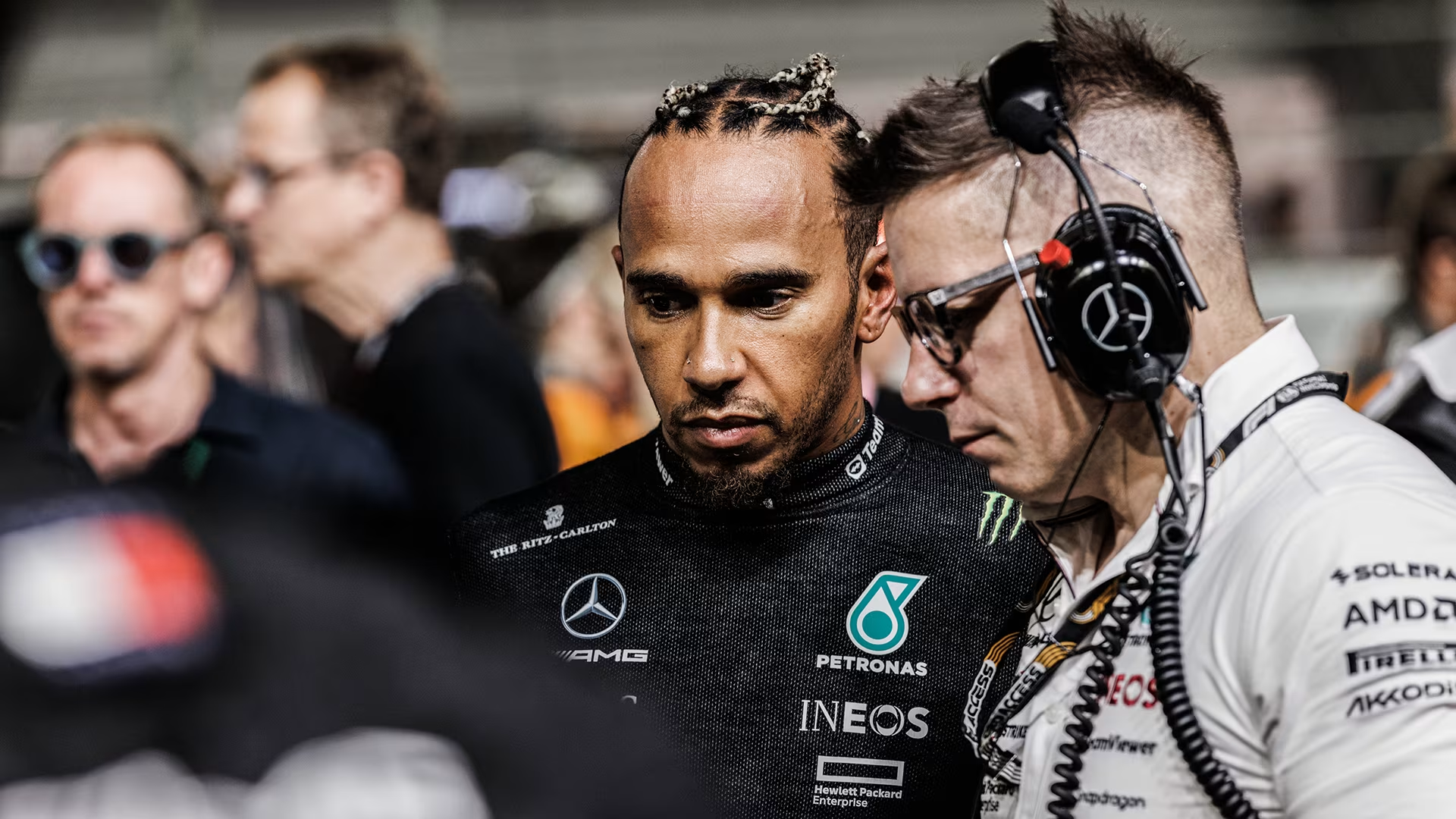
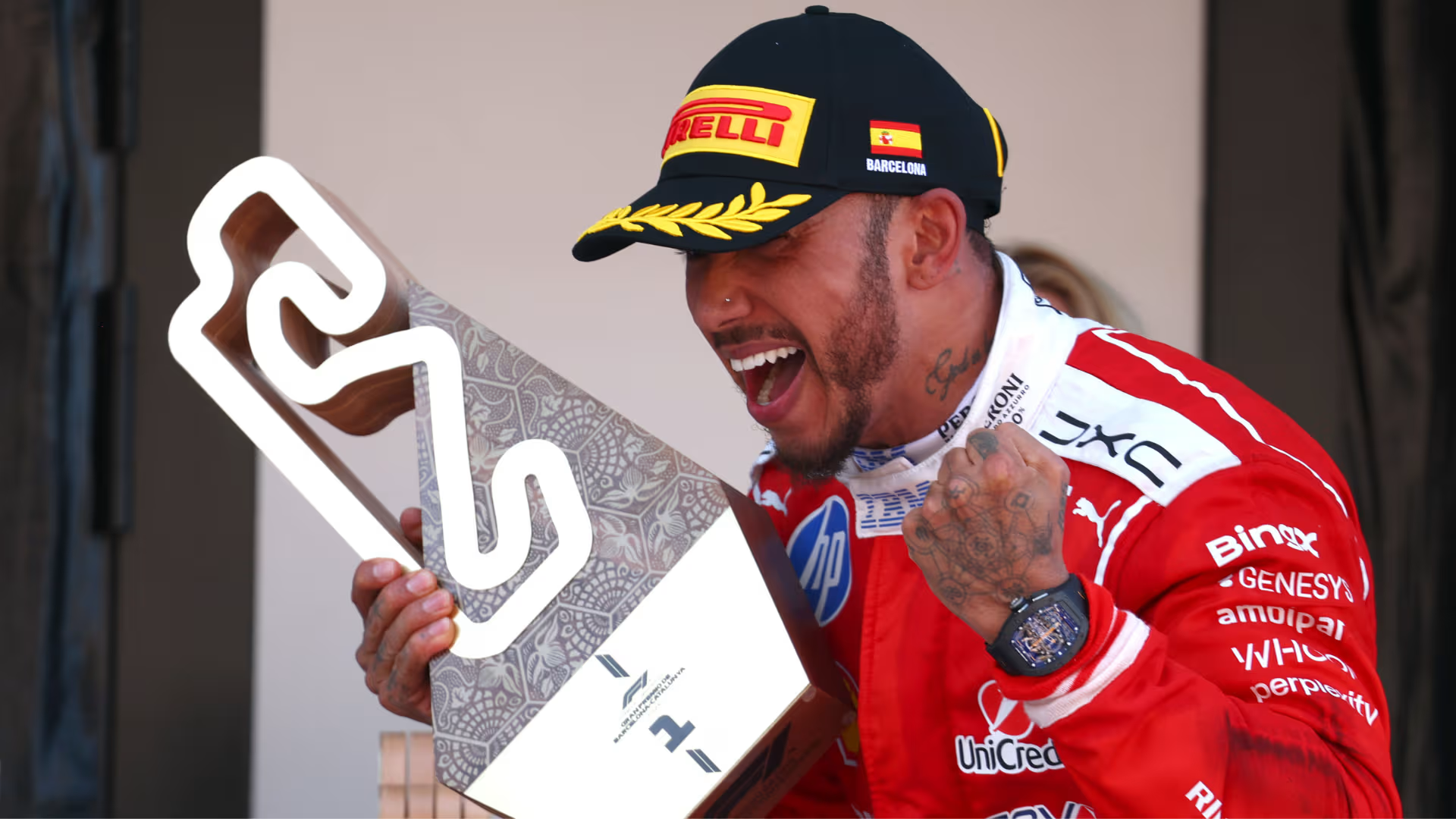
Lewis Hamilton represents the modern evolution of the driver-as-a-brand. Years of lucrative F1 contracts have boosted Lewis Hamilton’s bank balance to a reported $586 million. The seven-time world champion earned $45 million with Mercedes in 2023, and his move to Ferrari in 2025 is expected to push his earnings to $100 million per year, including bonuses and sponsorships. Hamilton is a diversified businessman with major ventures outside of Formula One, including a clothing brand, a non-alcoholic Agave drink brand, and a minority stake in the Denver Broncos NFL franchise. Despite his massive wealth, he remains highly philanthropic, donating millions to charitable causes.
3. Fernando Alonso – $260 Million
Longevity is a massive factor in wealth accumulation, and Fernando Alonso’s extended stay in F1 has resulted in a staggering net worth of $260 million. The Spanish two-time world champion has notably driven for Renault, Ferrari, McLaren, Alpine, and Aston Martin. He was reportedly making $30 million a year during his time at both McLaren and Alpine, and continues to command an $18 million salary well into his forties at Aston Martin. Beyond the cockpit, Alonso has pivoted toward the business of talent management. He acts as an agent for the next generation under A14 Management, strategically looking to bring talented young drivers through to Formula 1.
4. Max Verstappen – $250 Million
Max Verstappen has redefined what early-career wealth accumulation looks like in modern Formula 1. The Dutchman’s net worth has skyrocketed, placing him at a reported $250 million. Ranked as Formula 1’s highest-paid driver for multiple years by Forbes, Verstappen recently signed a new contract with Red Bull until 2030. He is supposedly set to take home ~$92 million per year, which will skyrocket his net worth. His massive salary is supplemented by personal sponsors and lucrative ambassadorships with brands like EA Sports. Rather than solely investing in traditional assets, Verstappen is funneling capital back into motorsport by investing in the creation of his own GT racing team.
5. Kimi Räikkönen – $250 Million
Kimi Raikkonen leveraged his massive earnings into a quiet, heavily fortified financial empire. The Finnish driver accrued a net worth of $250 million. Having been able to command one of the sport’s biggest salaries, earning over $45 million at the peak of his career, Raikkonen has made a series of smart property investments in Thailand and Finland. He also drove in the World Rally Championship and NASCAR, maximizing his commercial value across multiple motorsport disciplines.
6. Niki Lauda – $200 Million
Niki Lauda was as calculating in the boardroom as he was on the racetrack. The legendary driver won three F1 championships, taking to the cockpit for both Ferrari and McLaren, and amassed a net worth of $200 million. However, his true financial legacy was built in the skies. Lauda utilized his wealth to found commercial airlines. He also wrote five books and was no stranger to film and television cameos prior to his death in 2019. Lauda understood that the logistics and operational discipline he learned in the F1 paddock translated perfectly to the highly complex aviation industry.
7. Sebastian Vettel – $160 Million
Endorsements are the invisible engine powering the richest F1 drivers. Sebastian Vettel perfectly illustrates this model. The German four-time world champion accrued a net worth of $160 million. After spearheading Red Bull’s early success, he moved to Maranello, earning $50 million a year during a massive three-year contract with Ferrari. Even as he transitioned to Aston Martin, he commanded nearly $20 million annually. Furthermore, he secured major endorsements from global brands like Shell and Casio during the course of his career, significantly padding his bottom line.
8. Jenson Button – $150 Million
The 2009 F1 world champion built a fortune that now sits at an estimated $150 million. Button was reportedly one of Formula 1’s highest earners even before his championship victory, and a lucrative move to McLaren followed a year later. He earned a reported $17 million-a-year during his time at McLaren. He now boasts an investment property portfolio in Britain and Bahrain. Furthermore, a sponsorship with Mobil 1 keeps him behind the wheel in selected events, while he also works as a TV pundit and a senior advisor to Williams.
9. Mario Andretti – $130 Million
Even drivers crossing over from different motorsport disciplines bring immense commercial weight. Mario Andretti sits comfortably at a $130 million net worth. The American won F1 and IndyCar titles, along with victories in the Daytona 500 and Indianapolis 500. As one of only three drivers to win races in F1, IndyCar, NASCAR, and the World Sportscar Championship, his brand value is enduring and historically unparalleled.
10. Eddie Irvine – $120 Million
Perhaps the most impressive business transition belongs to Eddie Irvine. The Northern Irishman competed in F1 between 1993 and 2002, and his net worth now stands at $120 million. Earning a whopping $50 million for his time racing for Ferrari in the ’90s, Irvine put his money to work by making a foray into property investment. He built a mega-successful property portfolio where the majority of his net worth is derived, proving that an F1 driver can completely out-earn their racing career post-retirement.
Making Fortunes Off the Track: Real Estate, Airlines, and Equity
While the modern grid generates staggering wealth directly through team contracts, historical drivers had to rely heavily on off-track enterprise to build their fortunes. The smartest drivers use their racing salaries simply as seed capital. Property development has been a recurring theme among the wealthiest drivers. Eddie Irvine is the poster child for this strategy, utilizing his substantial Ferrari earnings to aggressively purchase and develop international real estate.
Kimi Raikkonen followed a similar blueprint, funneling his massive salaries into property investments in Finland and Thailand. Jenson Button also boasts an extensive investment property portfolio spanning Britain and Bahrain. By purchasing properties in emerging markets and heavily developing real estate, these athletes ensured their cash continued to compound year over year.
Beyond real estate, some drivers venture into highly complex corporate operations. Niki Lauda remains the gold standard for this level of business pivot, establishing multiple commercial airlines. In the modern era, Lewis Hamilton is aggressively diversifying his portfolio. By taking a minority ownership stake in the Denver Broncos NFL franchise, Hamilton has tapped into the lucrative world of American sports equity, proving that richest F1 drivers can expand their empire into entirely different athletic domains.
People Also Ask (FAQ)
Who is the richest F1 driver of all time?
Michael Schumacher still remains the richest F1 driver in history, with an estimated net worth of $790 million. Also, it is rumoured that during his peak his net worth reached over a $1 billion. His record-breaking success with Ferrari in the early 2000s allowed him to command unprecedented salaries and lucrative global brand endorsements.
How much are F1 drivers paid per year?
Top drivers can earn over $90 million annually from salaries alone. Bonuses and personal sponsorships may increase that number significantly. For instance, Lewis Hamilton and Max Verstappen are expected to earn $100 million per year at their respective teams.
Which F1 team pays the highest salaries?
Teams competing for championships typically offer the largest contracts. Historically and currently, the biggest spenders on driver talent include Mercedes, Ferrari, Red Bull and McLaren.