F1 Teams Valuations: 2026 vs 2020
Last updated: 23/07/2026
Formula 1 has historically been viewed as a sport where eccentric billionaires go to burn through their fortunes in pursuit of a World Championship. However, those days of unregulated, bottomless spending are definitively over. Today, the paddock operates as one of the most exclusive and highly lucrative financial ecosystems in the sporting world. When examining modern F1 teams valuations, the numbers we are seeing in 2026 would have been considered entirely unfathomable just six years ago.
The ultimate proof of this explosive financial growth lies not just in the top teams, but at the back of the grid. Recent paddock rumors confirmed that Red Bull outright rejected a staggering $3 billion takeover bid for their sister team, Racing Bulls. The bid was reportedly led by Dean Attew and Andrew Herriot, backed by massive Abu Dhabi investment funds. When a “junior” development team generates multi-billion-dollar acquisition offers, and the parent company says no because the team is viewed as an invaluable strategic asset, it becomes overwhelmingly clear that the fundamental F1 Teams worth has been permanently altered.
In this deep dive, we are breaking down the historic appreciation of the grid. We will compare the 2020 pandemic-era valuations to the skyrocketing 2026 figures, and analyze the business forces that transformed this sport into a Wall Street darling.
Key Takeaways
- A Billion-Dollar Baseline: Every single team on the 2026 grid, including newcomers and backmarkers, is now valued at well over $1 billion.
- The Williams Masterstroke: Bought for just $200 million in 2020, Williams is now valued at over $2 billion, making it one of the greatest sports acquisitions of the decade.
- Ferrari Retains the Crown: The Scuderia was the most expensive team in 2020 and remains the undisputed richest franchise in 2026.
- The Scarcity Multiplier: Limited grid spots, skyrocketing global viewership, and the financial cost cap mean that F1 team valuations still have significant room to grow.
A Brief History of F1’s Commercial Evolution
To understand why the current F1 Teams value has skyrocketed, we must look at the distinct commercial eras that laid the groundwork for today’s massive enterprise.
- 1977–1980 (The Global TV Era): Formula 1 used to be a fragmented, niche European motorsport. That changed in 1978 when Bernie Ecclestone took over the commercial rights and standardized international TV broadcasts. Standardized broadcasting brought the sport into living rooms worldwide, turning Grand Prix racing into a global weekend sporting staple.
- 1988–1994 (The Superstar Golden Age): Fueled by the legendary, dramatic, and often bitter rivalry between Ayrton Senna and Alain Prost, F1 reached massive worldwide viewership numbers. The late 1980s and early 1990s elevated drivers into global pop culture icons, bringing massive tobacco and corporate sponsorships into the paddock.
- 2019 (The Modern Explosion): While already a global powerhouse, F1 experienced an unprecedented modern boom starting in March 2019 with the release of Netflix’s docuseries Formula 1: Drive to Survive. This brilliant marketing maneuver brought millions of new, younger, and international fans to the sport. Crucially, it finally cracked the elusive US market, opening the floodgates for American private equity.
Why F1 Teams Valuations Are Skyrocketing
Why exactly are F1 Teams valuations reaching these astronomical heights in 2026? The answer lies in a perfect business storm of scarcity, guaranteed profitability, and explosive audience growth.
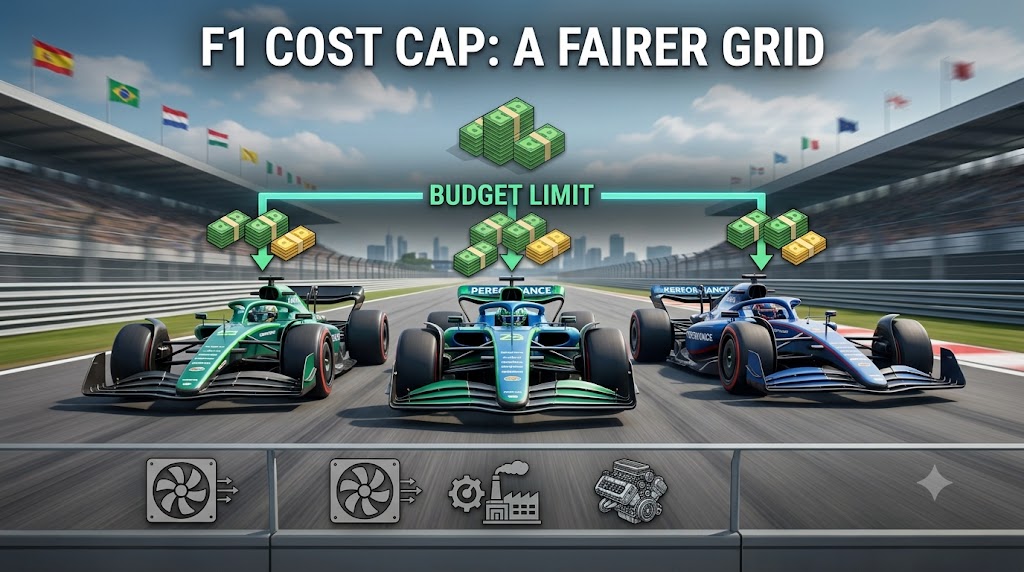
First and foremost is the introduction of the financial Cost Cap. Before this regulation, legacy teams spent well over $500 million a year to win, operating at massive annual losses. The cost cap forced strict operational efficiency. Because spending is legally capped but broadcasting and sponsorship revenues continue to climb, teams are now highly profitable businesses rather than endless money pits.
Second, the closed-franchise model creates immense market scarcity. There are only a limited number of spots on the grid. When Cadillac joined in 2026 as the 11th team, they had to pay a massive $450 million entry fee to the existing teams, alongside hundreds of millions in startup costs. The fierce resistance they initially faced from the grid was purely an exercise in protecting these soaring franchise values.
F1 Teams Valuations: 2026 vs 2020 Breakdown
Let’s dive into the concrete data. Comparing the grid in 2020 to 2026 showcases the most aggressive franchise appreciation in modern global sports history. Below is the financial evolution of every team on the current grid.
- Ferrari | 2026: $6.4bn to $7.1bn | 2020: $2bn: The Scuderia was the most expensive team in 2020 and easily retains its crown today. Their unmatched historic legacy, combined with the blockbuster signing of seven-time champion Lewis Hamilton, ensures their brand power sits above the rest of the grid.
- Mercedes | 2026: $5.88bn to $6.4bn | 2020: $1.8bn: The Brackley-based squad dominated the 2014 to 2020 era and are on track to win the WDC & Constructors Championship in 2026. Even through recent rebuilding phases, Mercedes remains a commercial titan with elite, state-of-the-art infrastructure.
- McLaren | 2026: $4.7bn to $5.2bn | 2020: $740m: CEO Zak Brown’s leadership transformed a struggling legacy team into a highly profitable, race-winning machine. McLaren has seen a massive appreciation in value over the last five years.
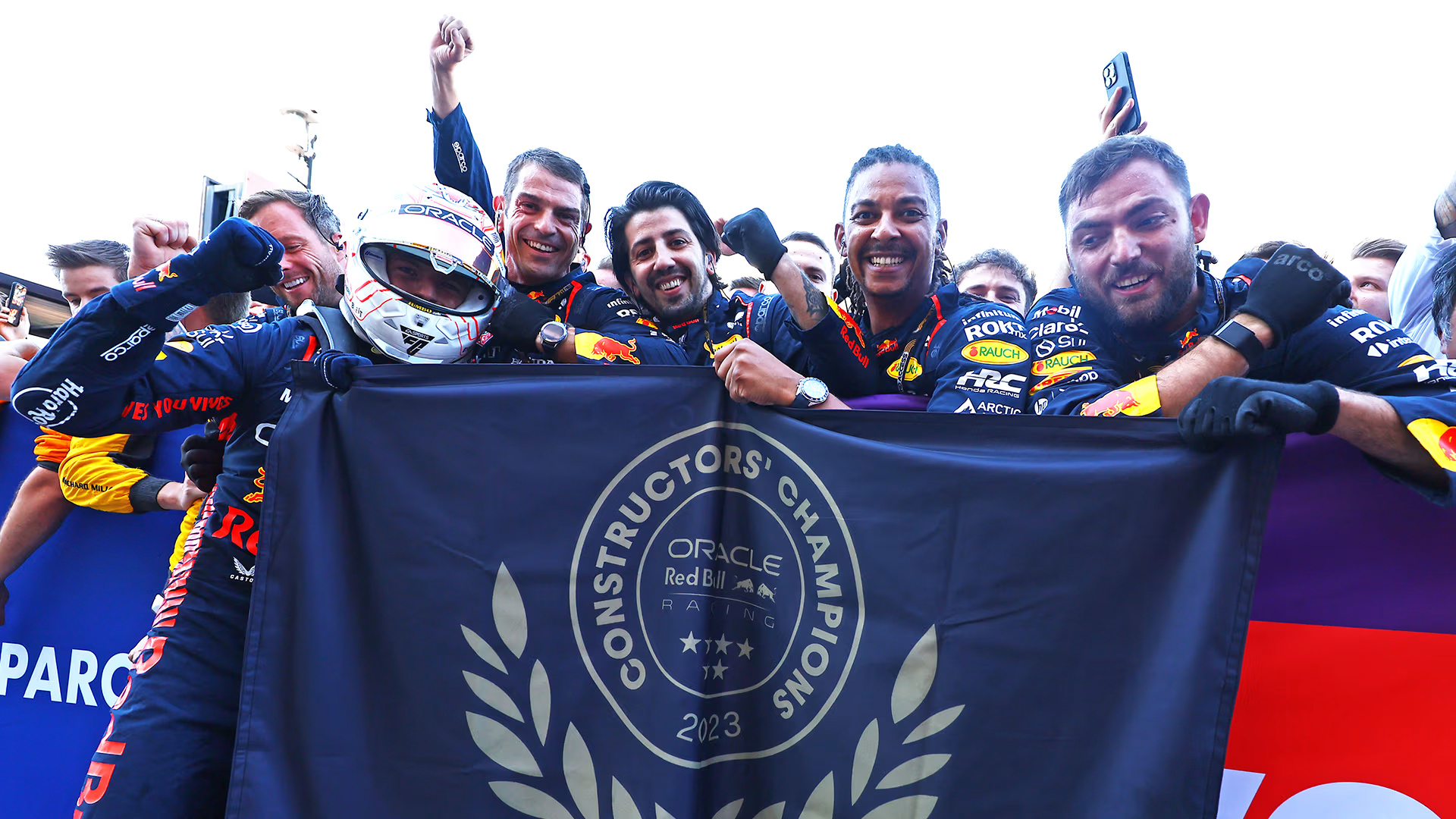
- Red Bull Racing | 2026: $4.35bn | 2020: $1.2bn: Max Verstappen’s era of track dominance and the brand’s aggressive global marketing reach have cemented the Milton Keynes outfit as a top-tier sporting franchise.
- Aston Martin | 2026: $3.18bn to $3.3bn | 2020: $450m (Racing Point): Lawrence Stroll’s aggressive investment in a brand-new Silverstone campus and major technical hires turned a plucky midfield runner into a premium billion-dollar brand.
- Racing Bulls | 2026: $3bn (Rumored Buyout) | 2020: $300m to $400m (AlphaTauri): As mentioned, Red Bull rejected a massive $3 billion takeover bid for this team. The Faenza-based squad allows young drivers to be trained and accelerates learning before moving to the main team, making it a priceless strategic asset.
- Williams | 2026: $2bn to $2.7bn | 2020: $180m to $200m: The historic Grove-based squad represents the highest percentage of growth on the grid, proving that legacy brands hold immense latent value.
- Alpine | 2026: $2.08bn to $2.6bn | 2020: $500m (Renault): Backed by the Renault Group and a recent influx of celebrity and private equity capital, the French squad’s baseline financial health is firmly secured.
- Audi | 2026: $1.8bn to $2.0bn | 2020: $300m (Sauber): The full corporate takeover of the Sauber entry by German automotive giant Audi has drastically elevated the Swiss team’s financial standing and factory capabilities.
- Haas | 2026: $1.5bn to $1.9bn | 2020: $280m: Even the grid’s smallest independent team is now worth well over a billion dollars. Gene Haas’s lean, heavily outsourced business model is now reaping massive equity rewards.
- Cadillac | 2026: $1.3bn | 2020: N/A: Entering the sport as the 11th team on the grid for the 2026 season, Cadillac’s immense immediate valuation reflects the intense global demand to join the exclusive F1 club.
The Most Profitable Investment on the Grid
If you want to understand the true impact of surging F1 Teams value, look no further than Williams Racing. In the summer of 2020, amidst the uncertainty of the global pandemic and sitting dead last in the Constructors’ Championship, the Williams family sold the team to US investment firm Dorilton Capital for roughly $200 million.
Fast forward to 2026, and that same team is valued at over $2 billion. Dorilton Capital capitalized on the exact bottom of the market, right before the Cost Cap leveled the playing field and Drive to Survive triggered the US viewership boom. The 10x multiplier on their initial investment makes the acquisition of Williams one of the most brilliant private equity plays in modern sports history.
Ultimately, Formula 1 is no longer just a motorsport; it is an elite financial asset class. As global television rights continue to climb and the Cost Cap enforces strict profitability, these valuations are likely to serve as the new baseline, not the ceiling.
People Also Ask (FAQ)
Why are F1 Teams valuations so high in 2026?
The massive surge in valuations is due to a combination of the FIA Cost Cap (which guarantees team profitability by limiting spending), the global explosion of the sport’s popularity driven by Netflix, huge growth in the US market, and the closed-franchise nature of the grid that limits supply.
Which F1 team is worth the most?
Scuderia Ferrari remains the most valuable team in Formula 1. As of 2026, the iconic Italian team is valued between $6.4 billion and $7.1 billion, driven by its unmatched historic brand prestige and massive commercial sponsorships.
Are Formula 1 teams actually profitable?
Yes. Prior to 2021, most teams operated at massive losses in a bid to buy lap time. Since the introduction of the financial Cost Cap, teams have strictly limited expenses while commercial revenues have soared, turning almost every team on the grid into a highly profitable enterprise.