
Will Christian Horner Retun to F1?
Last updated: 10/02/2026
The short answer is that Christian Horner is actively positioning himself for a return to Formula 1, but only on radically different terms than before.
This is no longer about whether he wants back in the paddock. It is about whether the right combination of ownership, governance, and timing aligns to make his return viable. The available evidence strongly suggests that a Christian Horner return is being engineered, not merely considered.
What follows is not speculation. It is an analysis of why Horner left, what has changed since, and which teams realistically fit the conditions he has set for coming back.
Christian horner achievements in F1
- 8 World Driver Championships
- 6 Worlds’ Constructor Championships
- Youngest F1 Team Principal (31 years old in 2005)
- The most dominant season in F1 History (2023, 21 out of 22 races won)
Table of Contents
Introduction
Statistics
What is the Netflix Effect in Formula 1?
How Drive to Survive Changed the F1 US Audience
F1 Viewership growth in the United States: What the Numbers Say
Why the Netflix Effect on F1 has a ceiling
Why Drive to Survive can’t convert Interest into Habit
Structural barriers holding back the F1 US Audience
Has controversy around Drive to Survive Hurt F1?
What the New season of Drive to Survive Means for F1
What Happens Next for Formula 1 in the United States
Conclusion: The Netflix Effect on F1 has reached its limits
FAQ
Why Christian Horner left Red Bull and why it matters now?
Christian Horner’s exit from Red Bull Racing in July 2025 was not a sudden rupture. It was the end point of a longer institutional shift inside the company following the death of Dietrich Mateschitz.
For two decades, Horner operated Red Bull Racing as a semi-autonomous entity. That autonomy was tolerated because performance insulated governance. Once that protection weakened, control reverted to Red Bull GmbH in Austria. Board authority increased, corporate oversight tightened, and informal power lost value.
Horner did not hold equity, he was simply an employee. When political alignment fractured, his position became expendable regardless of past success.
That context is essential when evaluating whether Horner F1 rumors make sense. His departure was not just personal. It revealed a structural vulnerability he is unlikely to repeat.
What Christian Horner has said about returning to F1
Since leaving Red Bull, Horner has been consistent on one point. He has unfinished business in Formula 1, but he will not return as a conventional employee.
Public comments during speaking tours in Europe and Australia reinforce the same theme. Horner has said he would only consider projects involving like-minded partners and a genuine desire to win, rather than participation for branding or politics.
That language matters. It signals that any Christian Horner return would require ownership influence, not just operational responsibility. This instantly narrows the list of possible teams.
Why most F1 teams are not realistic options
Despite regular fan speculation, the majority of the grid does not fit Horner’s stated conditions.
Mercedes is already owner-led under Toto Wolff. Ferrari’s governance model leaves no space for an external power figure. McLaren is institutionally stable under Andrea Stella and Zac Brown. Aston Martin is committed to Adrian Newey as a central technical and leadership figure.
Audi, Cadillac, and Haas do not align politically or structurally with Horner’s profile. Red Bull and Racing Bulls are self-evidently closed.
That leaves one realistic candidate as of now – Alpine.
Why Alpine keeps appearing in Christian Horner return discussions
Alpine’s situation is unique on the grid. It is a factory-backed team undergoing a managed retreat from traditional works-team identity.
Renault’s decision to exit F1 engine development at Viry-Chatillon fundamentally alters Alpine’s ownership logic. Without a proprietary power unit program, the team becomes less complex, less expensive, and more transferable as an asset.
For Horner, Alpine represents something he never had at Red Bull: an opening to become an owner-partner inside a top-level team with existing infrastructure and Concorde Agreement security.
This is why the speculation of Christian Horner’ return keeps circling Enstone.
The role of private equity and why timing matters
Reports linking Horner to a consortium involving MSP Sports Capital are not incidental. MSP previously held a minority stake in McLaren Racing and exited at a substantial valuation. That history gives credibility to any Alpine-related discussions.
The rumored focus on acquiring the 24 percent stake held by Otro Capital fits Horner’s stated desire to enter through equity, not employment. It also avoids immediate confrontation with Renault, which would retain majority ownership.
This phased approach aligns with how modern F1 ownership transitions actually occur.
How Horner’s gardening leave shapes the timeline
One reason the Christian Horner return conversation feels slow is contractual reality. His settlement with Red Bull included a gardening leave period that restricts operational involvement until spring 2026.
Importantly, this does not prevent investment activity. It explains why Horner has been visible in financial and governance discussions rather than team management roles.
The timing aligns cleanly with the expiration of restrictions and the early phase of the 2026 regulatory cycle.
Why the 2026 regulations make a return more likely
Technical resets reduce the cost of entry for new leadership. The 2026 regulations represent the largest reset in a decade, shifting emphasis toward electrical power, sustainable fuels, and active aerodynamics.
Alpine has already deprioritized 2025 performance to focus on this reset. For an incoming leader or investor, that creates cover for restructuring without immediate performance pressure.
Christian Horner built his Red Bull legacy by exploiting regulatory transitions. It would be consistent, not coincidental, if his return aligned with another one.
Christian Horner and Controversy
No serious analysis of Horner’ F1 prospects can ignore the reputational dimension. The internal investigation into allegations of inappropriate behavior created sustained media noise, despite Horner being formally cleared twice.
From an institutional perspective, the reported settlement that concluded the matter removes legal uncertainty. Private equity and corporate partners evaluate risk, not sentiment. On that basis, Horner remains commercially viable, even if controversy lingers.
That reality explains why investor interest has not disappeared.
So will Christian Horner return to Formula 1?
All available evidence points in the same direction. Christian Horner intends to return to Formula 1, but only if he can do so as an owner-partner with structural control.
Alpine currently represents the most realistic path. The combination of ownership fluidity, technical realignment, and regulatory timing makes it uniquely compatible with Horner’s conditions.
Whether the deal closes is still unresolved. But the question is no longer whether Horner wants back in F1. It is whether the final governance pieces fall into place.
Why does this question even matter?
Christian Horner’s situation reflects a broader shift in Formula 1. The era of the all-powerful hired team principal is fading. Equity, governance, and political insulation are becoming prerequisites for survival at the top.
Will Christian Horner return to F1? The forces shaping this decision will continue to shape the sport. That is why the question of his return is not just about one man, but about what Formula 1 leadership now requires.
FAQ
Will Christian Horner return to Formula 1?
Yes, but only under specific conditions. Christian Horner has made it clear that any return would involve ownership influence, not a standard team principal role.
Which teams is Christian Horner linked with?
Alpine is the primary team linked with Horner. Other teams are either structurally closed or incompatible with the type of role he is seeking.
Why does Alpine make sense for Horner?
Alpine’s changing ownership structure and move away from works engine status create a rare entry point for an owner-partner model.
When could Horner return in an official role?
The earliest realistic window is spring 2026, once his gardening leave from Red Bull expires.
Would Horner’s return guarantee success?
No. His presence would reshape leadership and governance, but performance would still depend on technical and strategic execution.
Recent Posts
-
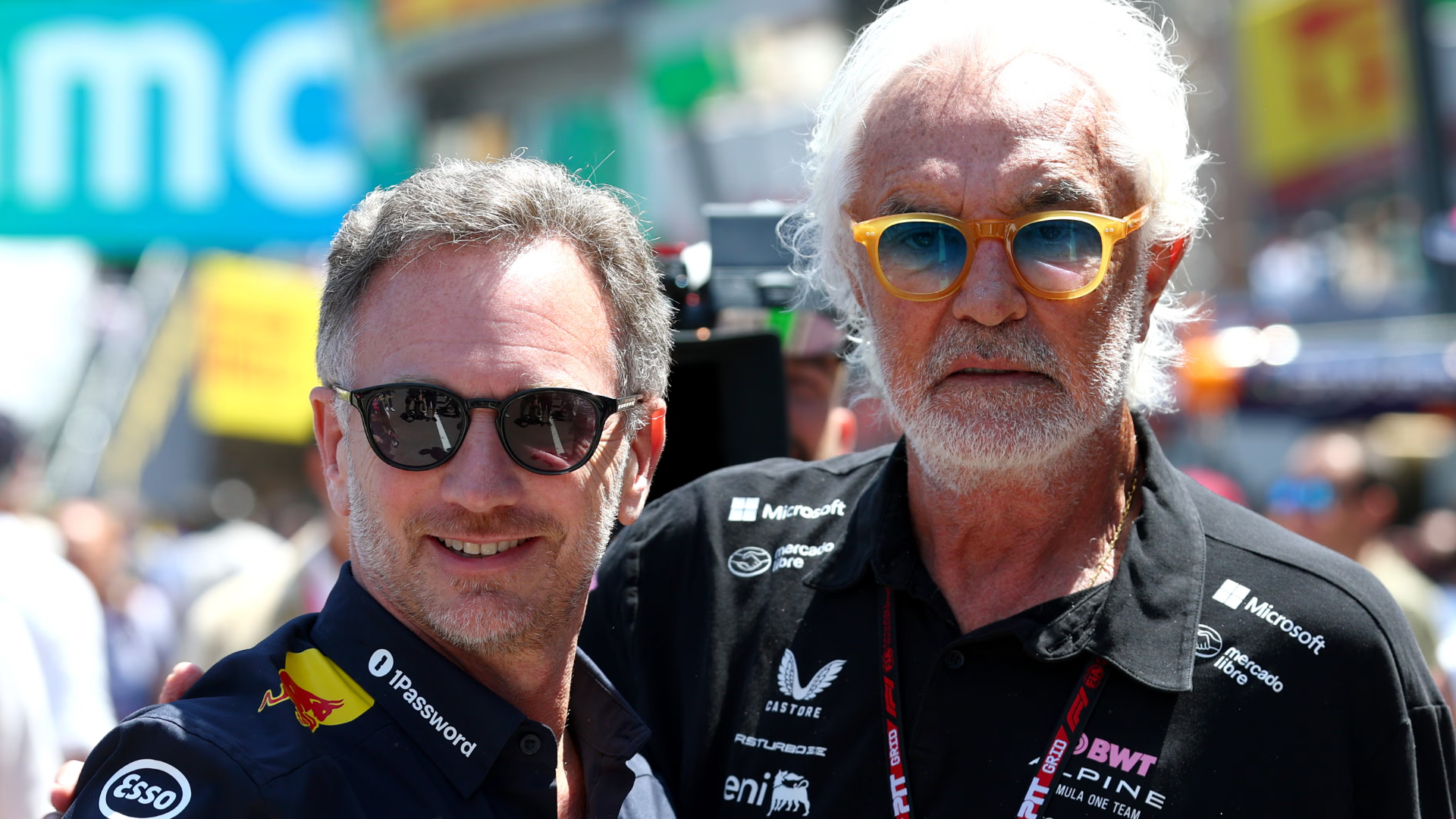
Will Christian Horner Return to F1?
-
The Netflix Effect on F1: A Data Analysis of America’s Boom and Its Ceiling
-
How to Become an F1 Driver?
-
Will Kalle Rovanperä Drive in Formula 1?
-
How Do F1 Car Reveals Work? 2026 Launch Dates
-
Why Formula 1 Is More Attractive to Brands Than Ever
-
F1 Fitness Explained: How Physically Demanding Is Formula 1 for Drivers?
-
Ferrari Driver Academy: From Karting to Formula 1
-
2026 F1 Power Unit Changes Explained: What the New Regulations Mean for Formula 1
-
Sauber F1 Team History Overview (1970-2025): From Independent Constructor to Audi Operation