
Why is Toto Wolff the Richest Team Principal in F1?
Last updated: 24/02/2026
Toto Wolff is widely regarded as the richest Team Principal in F1, and not by accident. The short answer is simple: he is not just a salaried executive. He is a long-term equity owner in the Mercedes Petronas AMG F1 Team, a trained investor who built wealth before entering Formula 1, and a strategic operator who positioned himself at the intersection of sport, manufacturer politics, and financial discipline. His fortune is structural, not circumstantial.
Understanding why Toto Wolff stands apart financially from his peers requires looking beyond paddock mythology and into ownership models, governance, and the economics of modern Formula 1.
Toto Wolff Is an Owner First, a Team Principal Second
The defining difference between Wolff and most of his counterparts is equity. Something that is getting harder to get in modern F1 and something that Christian Horner is actively chasing.
Toto Wolff owns a significant stake in the Mercedes-AMG Petronas Formula One Team. That alone changes the financial equation. A team principal who owns part of the team benefits from capital appreciation, dividend structures, and long-term valuation growth. A salaried principal does not. Aside from financial benefits, Toto Wolff has the security to work with a long- term mindset and suffer longer periods of bad form rather than a salaried TP.
In simple terms, the Richest Team Principal in Formula 1 is the one whose wealth is tied to assets, not payroll. Wolff’s reported ownership share aligns him alongside Mercedes-Benz and INEOS as a co-equal stakeholder. That makes him a partner in the enterprise, not merely an employee running it.
This distinction is often overlooked in fan discussions, which tend to focus on salaries rather than equity.
Mercedes Is Structured for Corporate Scale, Not Private Survival
To understand why Wolff became the Richest TP in F1, you need to understand the structure of Mercedes.
Unlike privately owned teams such as Haas or historically family-run outfits, Mercedes operates within a global automotive conglomerate framework. The team is backed by Daimler and INEOS, with formal governance, industrial budgets, and corporate valuation metrics.
That environment does two things.
First, it increases the team’s valuation stability. Corporate-backed teams are less vulnerable to sponsor volatility. Second, it creates a platform for equity appreciation that resembles high-end sports franchises or technology firms rather than traditional racing teams.
When Mercedes dominated from 2014 onward, the value of the team rose dramatically. Wolff’s equity rose with it. The hybrid era was not just a competitive success. It was a capital event.
The Hybrid Era Greatly Boosted Toto Wolff’s Net Worth
The 2014 regulation shift to turbo-hybrid power units was not merely a technical reset. It was a financial multiplier for the right team.
Mercedes invested early and aggressively into hybrid power development. That competitive advantage translated into championships, global brand exposure, and long-term sponsor stability.
Championship success does not automatically make a Team Principal wealthy. But when that success is paired with ownership, it becomes transformative.
Every title from 2014 to 2020 increased commercial leverage. Sponsorship deals strengthened. Prize money stabilized. Brand equity soared. Mercedes became the benchmark organization of the hybrid era.
Wolff, as a shareholder, benefited directly from that expansion. His wealth grew because the assets grew.
Why Toto Wolff’s Financial Background Matters
It is tempting to view Wolff’s fortune as a product of Mercedes dominance alone. That assumption ignores his pre-F1 career.
Before becoming a central figure in Formula 1, Wolff built wealth through investments in technology and industrial companies. He was not a former driver who transitioned into management. He was an investor who moved into motorsport with capital literacy.
That background matters.
Wolff understood valuation, shareholder dynamics, and exit strategies long before he entered the Mercedes boardroom. When he acquired stakes in Williams and later Mercedes, he did so with financial intent, not sentimental attachment.
Many Team Principals are racers at heart. Wolff is a financier who happens to run a racing team.
That difference explains why he is the Richest TP in Formula 1.
The Cost Cap Era Favors Equity Holders like Toto Wolff
The introduction of the budget cap in 2021 fundamentally changed team economics.
Historically, Formula 1 was a spending arms race. Profitability was secondary to performance. In that environment, owning a team could be a financial liability.
The cost cap altered the equation. For the first time, operating margins became realistic. Predictable spending ceilings combined with stable commercial revenue made teams investable assets.
This regulatory shift increased team valuations across the grid.
For someone like Toto Wolff, already holding equity in a top-tier team, the cost cap era is a wealth stabilizer. Mercedes is no longer just a competitive machine. It is a cost-controlled global sports property with measurable growth potential.
The Richest Team Principal in F1 is operating in the most owner-friendly financial structure the sport has ever seen.
How Much Richer is Toto Wolff Than Other F1 Team Principals?
Put simply, the wealth gap between Toto Wolff and the rest of the current F1 leadership is enormous and rooted in ownership, not just compensation. Wolff’s personal fortune is widely reported in the billion-dollar range, around $1.3 billion or more, reflecting both his longstanding equity stake in Mercedes-AMG Petronas and the team’s sustained increase in commercial value over more than a decade.
Compare that to his peers. Christian Horner, the former Red Bull Racing team principal who left that role in July 2025, is estimated to have a personal net worth of roughly $50 million as of late 2025, based on his earnings and investments during a 20-year tenure at Red Bull. Other active principals remain far lower: figures from 2025 show leaders like Fred Vasseur at Ferrari, Andrea Stella at McLaren, and others in the tens of millions rather than hundreds.
Even accounting for Horner’s sizable severance, widely reported at around $80 million to potential payouts north of $100 million after he officially exited Red Bull – his wealth remains starkly dwarfed by Wolff’s. In simple terms, Wolff’s net worth is an order of magnitude greater than any current or recent team principal of the 2025–2026 grid.
Manufacturer Politics Strengthened His Position
Wolff’s role extends beyond day-to-day operations.
He operates within a three-party ownership structure between Mercedes-Benz, INEOS, and himself. Maintaining that balance requires political skill. It also gives him leverage.
By positioning himself as an equal partner rather than a subordinate executive, he secured long-term strategic influence. That influence reduces personal volatility. He is not easily replaceable in the way a salaried principal might be.
Stability protects wealth. Equity combined with governance power compounds it.
This is not just about money. It is about structural insulation from corporate reshuffles that often affect manufacturer teams.
Challenging the Myth: Success Alone Does Not Create Wealth
A common assumption in F1 circles is that winning automatically makes leadership wealthy.
History contradicts that idea.
Several championship-winning Team Principals did not become ultra-wealthy individuals. They were career operators working for owners. Their income was tied to employment, not equity.
The key variable is ownership.
Toto Wolff did not become the Richest TP in F1 simply because Mercedes won titles. He became wealthy because he owned part of the machine that won them.
Performance accelerated growth. Ownership enabled it.
Without equity, championships are prestigious. With equity, they are capital appreciation events.
The Mercedes Brand Amplifies Personal Capital
There is also an indirect wealth effect.
Leading Mercedes during a dominant era enhanced Wolff’s personal brand in global business circles. That reputation increases board-level opportunities, investment access, and strategic leverage beyond Formula 1.
Elite sport leadership at corporate-backed teams functions as executive branding. The Mercedes role elevated Wolff into a different financial tier compared to principals running independent teams.
Brand equity, while harder to quantify than team valuation, reinforces long-term wealth preservation and expansion.
Why Team Ownership Matters for Future F1 Team Principals
The era of the traditional racing team boss is fading.
Modern Formula 1 increasingly resembles a franchise-based global sports league. Teams are appreciating assets. Private equity interest is rising. Governance is tightening.
In that environment, the Richest Team Principal in F1 will likely continue to be someone who combines operational leadership with ownership stake.
Wolff represents that hybrid model.
Future principals may follow a similar path, seeking equity rather than purely executive roles. The sport’s financial evolution rewards capital participation more than competitive tenure.
Conclusion: Toto Wolff is the Richest Team Principal in F1 by a Mile
Toto Wolff is the Richest Team Principal in F1 because he understood where Formula 1 was heading before many of his peers did. He aligned himself with a manufacturer powerhouse, secured equity at the right time, capitalized on a regulatory shift that increased team value, and operated with financial discipline rather than emotional management.
He is the Richest Team Principal in Formula 1 not because he shouts the loudest in press conferences or negotiates the hardest in the paddock, but because he structured his involvement around ownership and long-term asset growth.
As cost caps mature, Concorde agreements evolve, and teams become increasingly attractive to investors, the question of who owns what will matter more than who wins a single title.
That is why this topic will not fade.
The future Richest TP in Formula 1 will not simply be the best manager. He or she will be the best capital strategist. Toto Wolff set that template, and the rest of the grid is still catching up.
Recent Posts
-
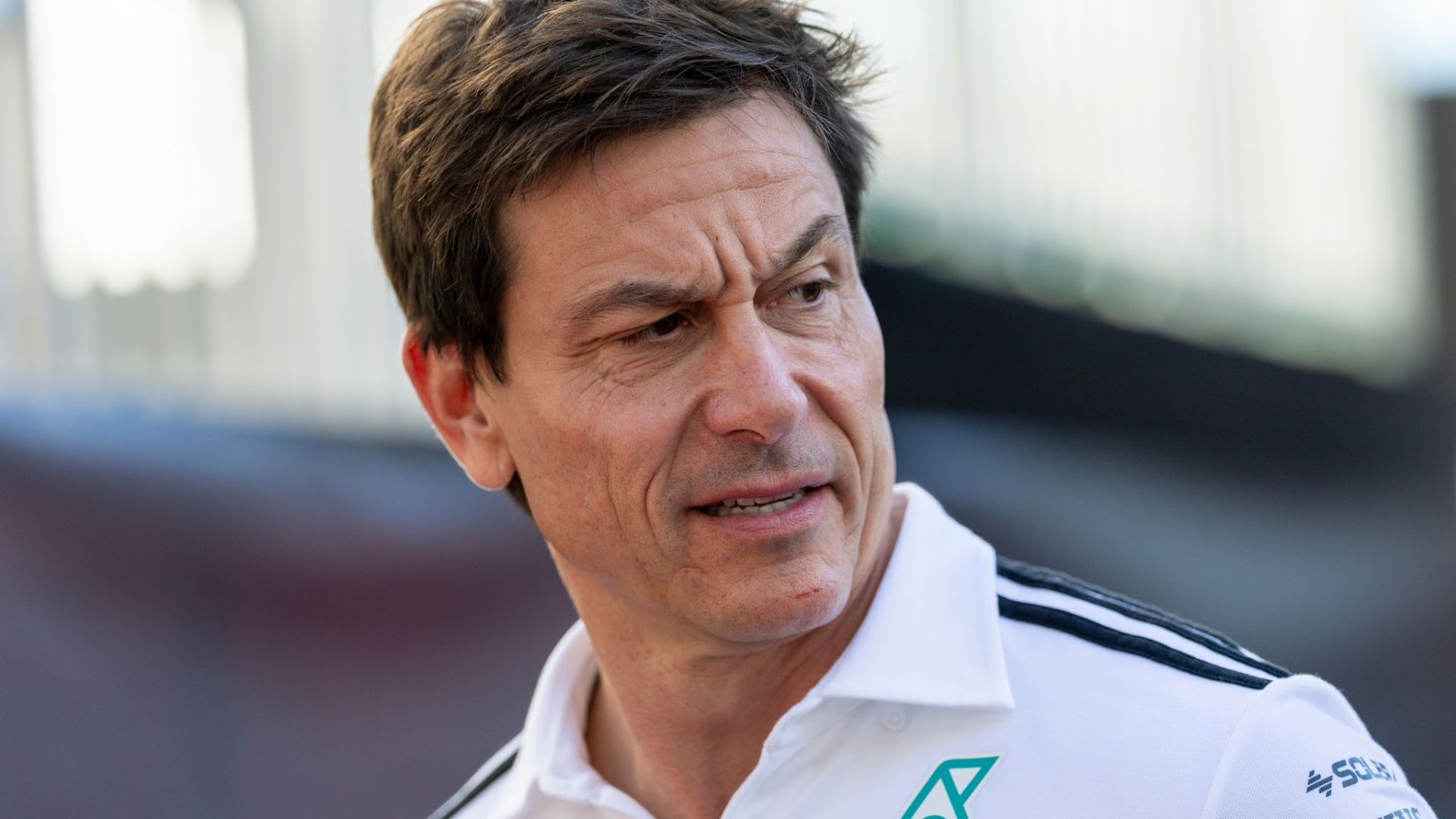
Why is Toto Wolff the Richest Team Principal in F1?
-
Who is Winning the 2026 F1 Engine War?
-
Will Christian Horner Return to F1?
-
The Netflix Effect on F1: A Data Analysis of America’s Boom and Its Ceiling
-
How to Become an F1 Driver?
-
Will Kalle Rovanperä Drive in Formula 1?
-
How Do F1 Car Reveals Work? 2026 Launch Dates
-
Why Formula 1 Is More Attractive to Brands Than Ever
-

F1 Fitness Explained: How Physically Demanding Is Formula 1 for Drivers?
-
Ferrari Driver Academy: From Karting to Formula 1