
Who is Winning the 2026 F1 Engine War? The Power Hierarchy Revealed
Last updated: 21/02/2026
As the dust settles on the final pre-season Bahrain testing sessions, the pecking order for the new era of grand prix racing is finally coming into focus. While lap times in February are greatly deceptive, the internal metrics from the paddock point to a clear leader. Mercedes currently holds the advantage in the 2026 engine war, largely due to a controversial “compression ratio trick” that has rivals like Ferrari and Audi scrambling for a late-stage regulatory intervention. While Red Bull-Ford has surprised many with their raw deployment on the straights, the overall efficiency and reliability of the Brixworth-built unit make it the early benchmark for the 2026 season.
Is the Mercedes “Compression Loophole” the New Double Diffuser?
The most significant technical row currently simmering in the Sakhir paddock involves a perceived loophole in how the 2026 F1 Engine compression ratio is measured. The regulations state a strict 16:1 limit, but this is verified under ambient, cold-engine conditions. Rumors suggest that Mercedes High Performance Powertrains (HPP) has engineered a solution where thermal expansion at operating temperatures effectively increases this ratio.
This mechanical sorcery allows for superior combustion efficiency without triggering a technical infringement during static inspection. If the estimates of a 15-horsepower gain are accurate, Mercedes has effectively secured a three-tenths-per-lap advantage before a single car has even turned a wheel in Melbourne. This is the definition of “gray area” engineering that historically defines the start of any new regulation cycle.
Red Bull-Ford: Have the Newcomers Actually Beaten the Odds?
One of the most common fan assumptions heading into this year was that the Red Bull-Ford project would be a reliability disaster. Transitioning from a chassis specialist to a full-scale power unit manufacturer is a monumental task, yet the data from the Bahrain testing suggests the Milton Keynes squad is remarkably well-prepared.
The synergy between the internal combustion engine (ICE) and the Ford-backed electrical systems has produced a car that is a monster at the end of long straights. While Mercedes may have the edge in pure thermal efficiency, the Red Bull-Ford unit appears to have mastered the energy recovery deployment. By utilizing Ford’s expertise in battery cell chemistry, they are managing to avoid the “clipping” phenomenon where the electrical motor runs out of juice at the end of a straight, better than almost anyone else on the grid.
What are the F1 2026 Regulations and Why Do They Change the Hierarchy?
The F1 2026 Regulations represent a total philosophy shift for the sport. The previous 80:20 power split favoring the internal combustion engine has been replaced by a nearly 50:50 distribution. Total output remains around 1,000hp, but the electrical component has surged from 120kW to 350kW. Crucially, the removal of the MGU-H (Motor Generator Unit- Heat) has simplified the hybrid system but put immense pressure on the MGU-K (Motor Generator Unit- Kinetic) and sustainable fuel chemistry to pick up the slack.
Why is Audi Facing an Early Horsepower Deficit?
Audi’s entry into Formula 1 was heralded as the arrival of a titan, but the transition from the Sauber infrastructure to a full factory works program has been painful. Mattia Binotto has already publicly lowered expectations, admitting that the Neuburg-built engine is likely trailing the leaders.
The problem is not a lack of resources, but a lack of historical hybrid data. Mercedes and Ferrari have twelve years of V6 Turbo Hybrid telemetry to draw from; Audi is starting from a blank sheet of paper. Reports from the test suggest the Audi unit is struggling with vibration harmonics at high RPMs, forcing the team to run a “safe” engine map that costs them significant time in the middle of the lap.
The Honda-Aston Martin Marriage: A Packaging Nightmare?
The works partnership between Honda and Aston Martin should be a match made in heaven, but the F1 Engine development cycle has hit a snag regarding “tight packaging.” Under the direction of Adrian Newey, the AMR26 features some of the most aggressive rear-end packaging ever seen in the sport.
While this provides an aerodynamic benefit, the Honda power unit is reportedly suffering from overheating issues. During the hotter afternoon sessions in Bahrain, Aston Martin was forced to run with significantly more open bodywork than their rivals. This creates a strategic catch-22: run the engine at full power and risk a thermal failure, or turn it down and lose the aero advantage to the drag of cooling louvers.
Challenging the “Sustainable Fuel” Parity Myth
A major media narrative has been that the switch to 100% sustainable fuels would be performance-neutral. This is factually incorrect. The new fuels have a lower energy density, meaning the chemical formulation is now a primary performance differentiator.
Shell, Petronas, and Aramco are no longer just suppliers; they are core engineering partners. Binotto has suggested that a poor fuel formulation can be worth up to 0.4 seconds per lap. It appears Petronas has found a way to maintain higher calorific value within the FIA-mandated RON (Research Octane Number) limits, further bolstering the Mercedes advantage. This isn’t just an engine war; it’s a chemical one.
Ferrari’s “Upside-Down” Cooling Philosophy
Ferrari has taken a radical approach to their F1 2026 Engine integration, specifically regarding the intercooler and plenum placement. While the car topped the timing sheets on the final day in Bahrain, there is a lingering fear that they have prioritized qualifying performance over race-stint energy management.
The Ferrari unit harvests energy extremely quickly, allowing for devastating “out-laps.” However, the F1 2026 Regulations reward those who can sustain that energy over a 57-lap race distance. If Ferrari cannot resolve the high-speed “derating” issues seen in their long runs, Charles Leclerc and Lewis Hamilton may find themselves defenseless against Mercedes-powered cars in the closing stages of a Grand Prix.
Will the FIA Intervene Before the Australian Grand Prix?
The political tension in the paddock is at an all-time high. Ferrari, Audi, and Honda have reportedly held emergency meetings with the FIA to discuss the Mercedes compression loophole. The governing body is in a difficult position: they want to avoid a “runaway” championship, but they also cannot punish a manufacturer for a clever interpretation of the rules before the first race.
History suggests that unless a design is “blatantly illegal,” the FIA will allow it to stand for the first half of the season. This puts the non-Mercedes teams in a desperate race to “reverse engineer” the thermal expansion tricks within their own homologated designs, a task that is nearly impossible given the strict engine-freeze rules.
The Favorites: Who Will Lead the Pack in Melbourne?
Based on the aggregated data from Bahrain, the hierarchy for the top dogs is becoming clear. Mercedes is the undisputed favorite to dominate the opening rounds. Their combination of the HPP power unit’s efficiency and the W17’s robust mechanical platform has produced a car that looks “on rails” during race simulations.
Ferrari sits as the primary challenger, boasting a qualifying pace that can threaten Mercedes on Saturdays. We believe the Red Bull- Ford partnership is not too far behind them. However, the true “dark horse” of the 2026 F1 engine war is the McLaren-Mercedes partnership. By utilizing the class-leading Brixworth engine within a chassis that remains aerodynamically superior to the works Mercedes team, McLaren looks poised to split the Silver Arrows.
The Backmarkers: Who is Drowning in the Technical Reset?
The brutal reality of a regulation reset is that someone always gets it wrong. Aston Martin currently occupies the most precarious position on the grid. The chronic unreliability of the Honda battery system and the fundamental vibration issues in the gearbox have left Fernando Alonso nearly four seconds off the pace. Without a miracle software patch, the AMR26 risks being a “DNF specialist” for the first half of the year.
Close behind them in the struggle is Cadillac. While their Ferrari customer engines are reliable, the team is struggling with the complex “Active Aero” mapping required by the 2026 Regulations. Along with Audi, who are still finding their feet in the 400kW power bracket, these teams will likely spend 2026 fighting to stay within the 107% rule rather than fighting for points.
Conclusion
The 2026 Engine war will continue to matter long after the season opener because these designs are effectively locked in until 2030. In previous eras, a chassis deficit could be fixed in a wind tunnel over six months. In the current homologation era, an engine deficit is a four-year sentence.
The data and rumours suggest that Mercedes has once again found the magic bullet. While Red Bull-Ford and Ferrari have the raw ingredients to compete, the technical sophistication of the Mercedes combustion cycle has created a gap that is too wide to close with aerodynamic updates alone. The 2026 season will not be won by the driver who brakes the latest, but by the manufacturer that engineered the most efficient chemical and thermal recovery cycle. In the new era of Formula 1, the laboratory has officially beaten the racetrack.
Recent Posts
-
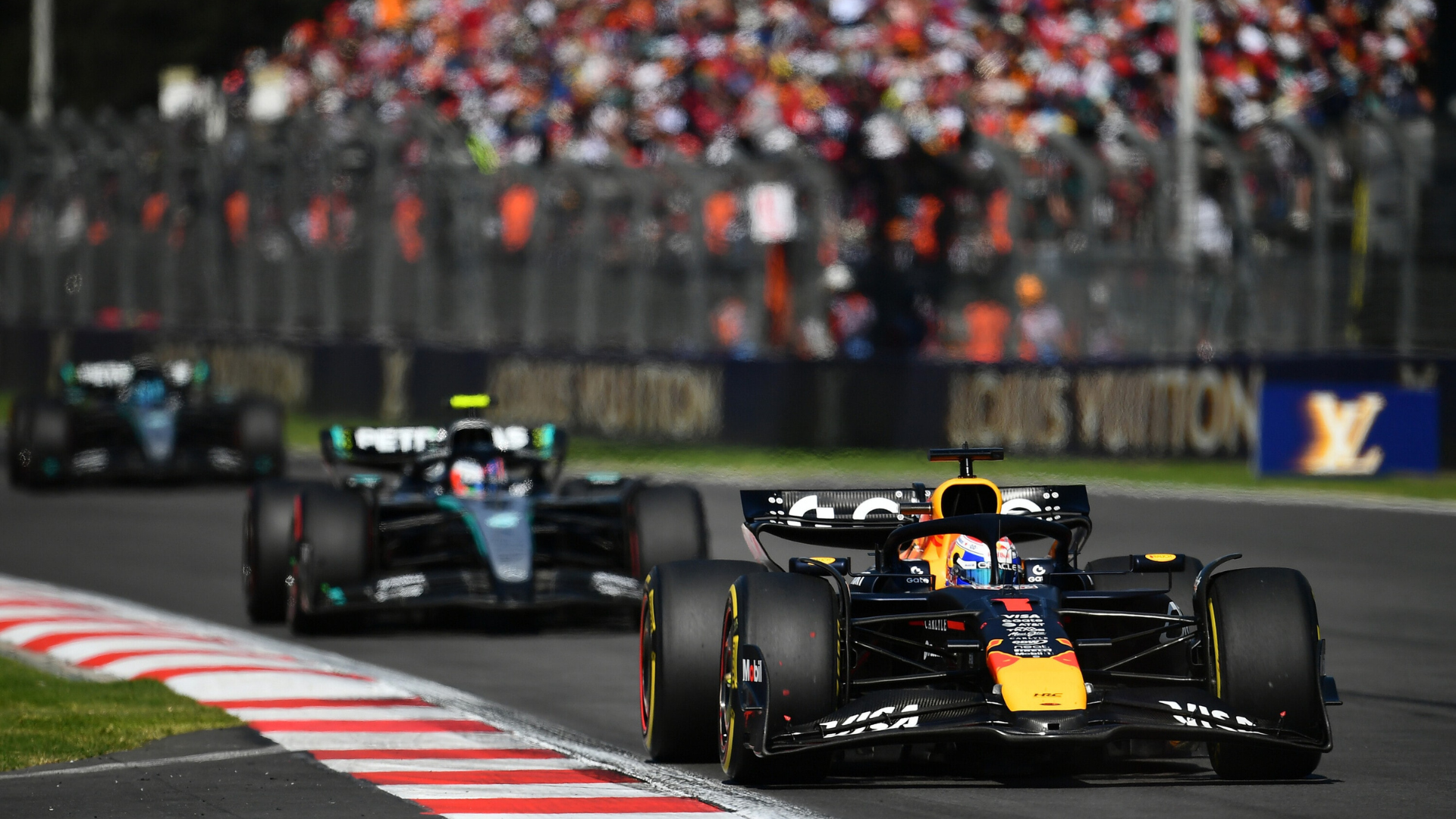
Who is Winning the 2026 F1 Engine War?
-

Will Christian Horner Return to F1?
-
The Netflix Effect on F1: A Data Analysis of America’s Boom and Its Ceiling
-
How to Become an F1 Driver?
-
Will Kalle Rovanperä Drive in Formula 1?
-
How Do F1 Car Reveals Work? 2026 Launch Dates
-
Why Formula 1 Is More Attractive to Brands Than Ever
-

F1 Fitness Explained: How Physically Demanding Is Formula 1 for Drivers?
-
Ferrari Driver Academy: From Karting to Formula 1
-
2026 F1 Power Unit Changes Explained: What the New Regulations Mean for Formula 1