The Netflix Effect on F1: A Data Analysis of America’s Boom and Its Ceiling
Last updated: 24/01/2026
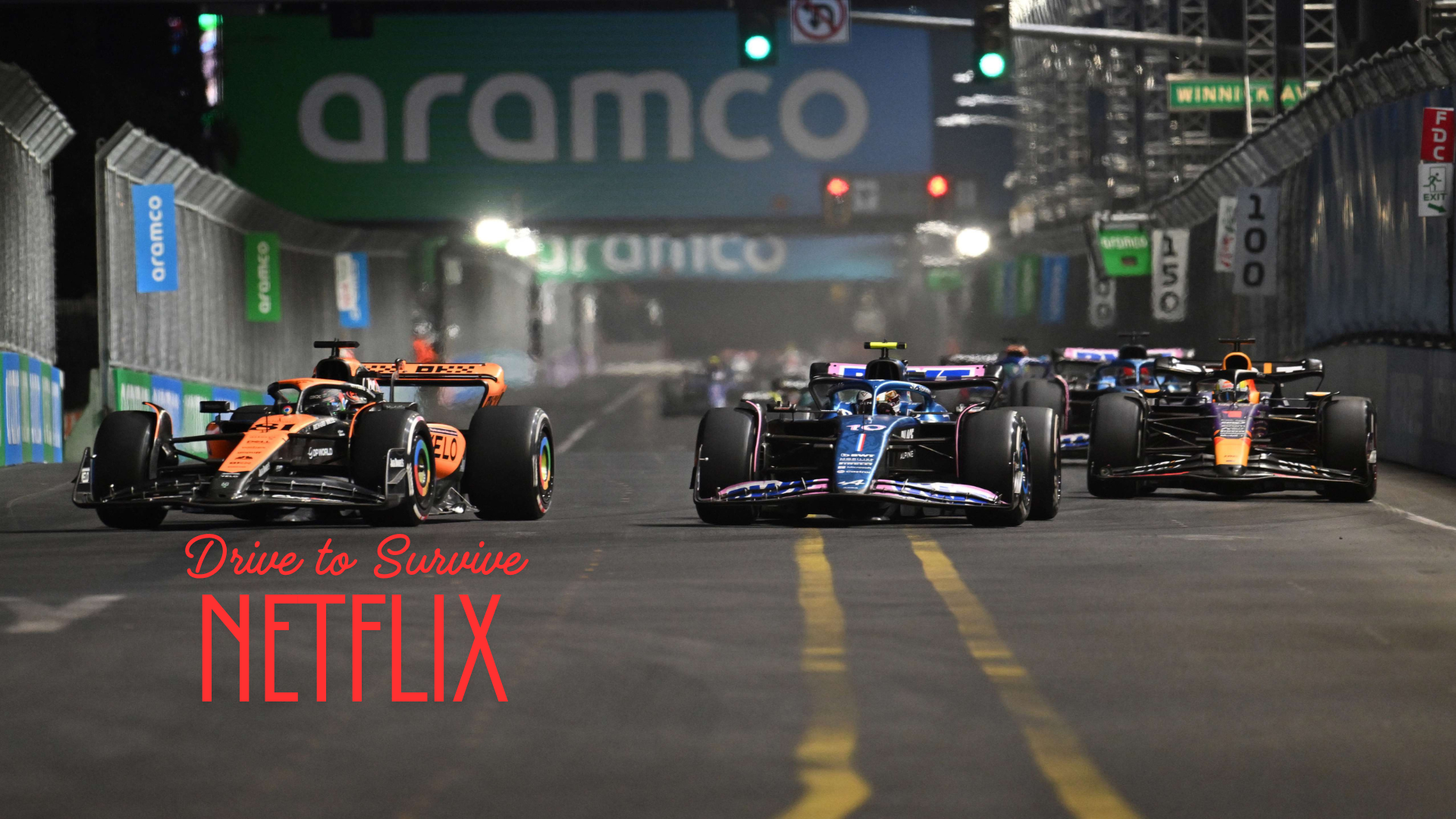
The Netflix effect F1 has experienced since Drive to Survive launched in 2019 is undeniable. Formula 1’s visibility in the United States has surged, its fanbase has diversified, and the sport now occupies a cultural space it never previously held in the American market.
Yet the data shows a clear limitation. While Drive to Survive dramatically increased awareness and casual interest, it has not produced a proportional rise in sustained race viewership. As the season 8 of the hit show releases on the 27th of February, Formula 1 faces a crucial inflection point: the boom is real, but the ceiling is now visible.
Statistics
- U.S viewership for F1 has more than doubled since the Netflix era (from ~600k to about 1.3 million per race) (The Sun)
- More than 360 000 US viewers first watched F1 after watching Drive to Survive (Nielsen Sports)
- Season 7 of Drive to Survive was one of Netflix’ most watched sports docuseries, with more than 10 million views reported in the first half of 2025 (PlanetF1)
Table of Contents
Introduction
Statistics
What is the Netflix Effect in Formula 1?
How Drive to Survive Changed the F1 US Audience
F1 Viewership growth in the United States: What the Numbers Say
Why the Netflix Effect on F1 has a ceiling
Why Drive to Survive can’t convert Interest into Habit
Structural barriers holding back the F1 US Audience
Has controversy around Drive to Survive Hurt F1?
What the New season of Drive to Survive Means for F1
What Happens Next for Formula 1 in the United States
Conclusion: The Netflix Effect on F1 has reached its limits
FAQ
What Is the Netflix Effect in Formula 1?
The Netflix effect in F1 refers to the measurable increase in interest, cultural relevance, and entry-level fandom generated by Drive to Survive. Rather than teaching the sport technically, the series humanises Formula 1 through narrative storytelling, rivalries, and behind-the-scenes access.
This approach lowers the barrier to entry for new audiences. Viewers do not need prior knowledge of rules or strategy to feel emotionally invested. That distinction explains why the Drive to Survive impact is strongest among younger fans and those new to motorsport.
How Drive to Survive Changed the F1 US Audience
The most visible change driven by Drive to Survive has been demographic. Nielsen and industry research show that new American F1 fans skew younger, more digitally engaged, and more diverse than traditional European audiences.
Women now account for a significantly larger share of new U.S. fans, and social media engagement has grown faster in the United States than in most legacy markets. This shift aligns closely with Netflix’s core audience and viewing habits.
For Formula 1, this represented a structural breakthrough rather than a marketing win.
F1 Viewership Growth in the United States: What the Numbers Say
F1 viewership growth in the U.S. has been real and sustained since 2019. ESPN data shows average race audiences rising from the mid-600,000 range to consistently above one million viewers per race in recent seasons.
That growth matters. It confirms that Netflix exposure translates into at least some live consumption. It also coincides with the expansion of U.S. races in Austin (COTA), Miami, and Las Vegas, reinforcing Formula 1’s domestic presence.
However, growth rate and scale are not the same thing.
Why the Netflix Effect on F1 Has a Ceiling
Despite survey data suggesting that nearly one-third of American adults now identify as F1 fans, average race viewership remains around 1.1–1.3 million. The gap between self-identified interest and habitual viewing is the defining limitation of the Netflix effect F1 is experiencing.
For comparison, NASCAR continues to average close to four million viewers per race in the U.S. That difference is not explained by exposure or awareness. It is explained by structural engagement.
Netflix generates curiosity. Formula 1 still struggles to convert that curiosity into routine behaviour.
Why Drive to Survive Can’t Convert Interest Into Habit
The Drive to Survive impact is strongest at the top of the funnel. The series is designed for binge consumption, not weekly reinforcement. Its narrative structure rewards conflict, personality, and drama, not continuity or competitive context.
As a result, many new fans feel emotionally connected without feeling compelled to follow the sport live. They recognise drivers and rivalries but lack incentives to commit time every race weekend.
This is not a failure of storytelling. It is a limitation of the format.
Structural Barriers Holding Back the F1 US Audience
Several structural factors limit the Netflix effect’s ability to scale further.
Pricing is the most immediate. U.S. Grands Prix are among the most expensive on the calendar, with average ticket prices far exceeding both European F1 races and NASCAR events. This clashes directly with the younger audience Netflix attracts.
Accessibility also matters. Race start times, fragmented broadcast access, and limited free-to-air exposure reduce casual viewing opportunities.
Identity remains unresolved. American sports fans historically connect more deeply with domestic drivers and teams. Formula 1 has yet to establish a consistent American hero narrative. Will Cadillac’s entry to Formula 1 change the game? Only time will tell.
Netflix can highlight personalities, but it cannot manufacture cultural belonging.
Has Controversy Around Drive to Survive Hurt F1?
Criticism of Drive to Survive, particularly accusations of manufactured drama has not slowed Formula 1’s growth. If anything, controversy has amplified visibility and discussion.
What it has not done is meaningfully increase race viewership. Debate keeps F1 relevant in the cultural conversation, but relevance alone does not guarantee engagement.
What the New Season of Drive to Survive Means for F1
The upcoming season of Drive to Survive represents more than another content cycle. It is a test of whether the Netflix effect F1 has relied on can still expand the sport’s committed audience.
If early-season U.S. viewership rises meaningfully, it suggests the ceiling can still move. If it does not, the data will confirm that Netflix has already delivered most of what it can.
At that point, responsibility shifts decisively back to Formula 1’s own structural decisions.
What Happens Next for Formula 1 in the United States
For Formula 1, the next phase is not about discovery. It is about conversion.
That means improving accessibility, lowering financial barriers, strengthening American identity hooks, and bridging the gap between narrative storytelling and live sport. Drive to Survive can open the door, but only Formula 1 can convince fans to stay.
The Netflix effect on F1 solved visibility. It did not solve loyalty.
Conclusion: The Netflix Effect on F1 Has Reached Its Limit
The Netflix effect F1 experienced over the past six years transformed the sport’s position in the American market. It created awareness, diversified the fanbase, and redefined how Formula 1 presents itself.
But the data now shows a ceiling. Interest has grown faster than engagement. Visibility has outpaced habit.
As a new season of Drive to Survive launches, the defining question is no longer whether Netflix can grow Formula 1’s audience. It is whether Formula 1 can finally turn that audience into something durable.
FAQ
What is the Netflix effect on F1?
The Netflix effect on F1 is the surge in awareness and interest generated by Drive to Survive, particularly in the U.S., without a matching rise in regular race viewership.
Has Drive to Survive increased F1 viewership in the United States?
Yes, U.S. Formula 1 race viewership more than doubled after Drive to Survive launched, but growth has since levelled off.
Did Drive to Survive create real F1 fans?
Drive to Survive created many new and casual fans, but only a minority consistently watch Formula 1 races.
Why is F1 still behind NASCAR in the U.S.?
Formula 1 remains behind NASCAR because it is more expensive, less accessible, and lacks strong American driver representation.
Will the new season of Drive to Survive increase F1 viewership?
The new season will boost attention and discussion, but sustained viewership growth depends on changes made by Formula 1 itself.
Recent Posts
-
The Netflix Effect on F1: A Data Analysis of America’s Boom and Its Ceiling
-

How to Become an F1 Driver?
-
Will Kalle Rovanperä Drive in Formula 1?
-
How Do F1 Car Reveals Work? 2026 Launch Dates
-
Why Formula 1 Is More Attractive to Brands Than Ever
-
F1 Fitness Explained: How Physically Demanding Is Formula 1 for Drivers?
-
Ferrari Driver Academy: From Karting to Formula 1
-
2026 F1 Power Unit Changes Explained: What the New Regulations Mean for Formula 1
-
Sauber F1 Team History Overview (1970-2025): From Independent Constructor to Audi Operation
-
Audi F1 Team: Full Overview of the German Manufacturer