
F1 Fitness Explained: How Physically Demanding Is Formula 1 for Drivers?
Last updated: 06/01/2026
Fitness in F1 is a defining but often misunderstood aspect of modern racing. While drivers spend races seated inside the cockpit, the physical demands of operating a Formula 1 car place them among the most conditioned athletes in global sport. Extreme g-forces, intense heat, sustained cardiovascular strain, and constant cognitive load mean that fitness directly influences lap time, consistency, and race outcomes.
Understanding physical demands of an F1 driver is essential to understanding why drivers train year-round, why physical preparation is tightly regulated, and why even small deficits can be exposed over a full Grand Prix distance. Formula 1 is not simply about driving skill; it is about sustaining elite physical performance under uniquely hostile conditions.
Table of Contents
Introduction
Why Conditioning Matters in Formula 1
G-Forces and Neck Strength
Cardiovascular Demands and Heat Stress
Upper Body and Core Strength
Lower Body Strength and Braking Forces
Reaction Time and Neuromuscular Control
Weight Management and Regulatory Constraints
Mental Fatigue as a Physical Factor
The Evolution of F1 Training
Conclusion
FAQ
Why Conditioning Matters in Formula 1
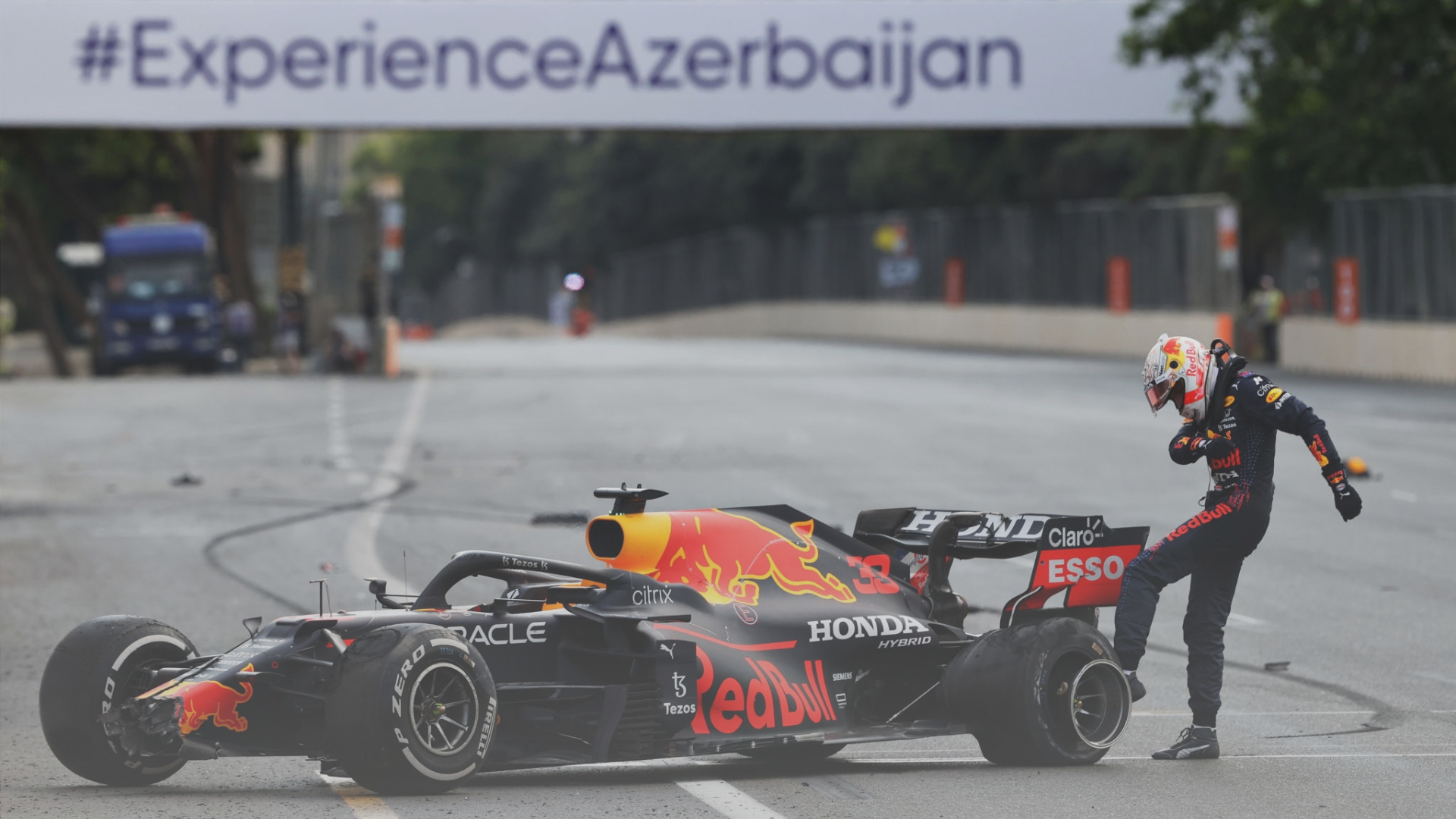
Formula 1 cars are engineered to maximise downforce, braking efficiency, and cornering speed. According to FIA technical regulations, modern cars can generate lateral forces exceeding 5g, subjecting drivers to loads rarely encountered outside aviation or elite motorsport. In the event of a crash, the lateral forces can go up to 50g for a split second (Max Verstappen, 2021 in Silverstone).
Unlike many sports, Formula 1 offers no opportunity for substitution or recovery mid-event. Drivers must maintain peak performance for up to two hours, often in extreme temperatures (i.e Singapore), while processing complex strategic and technical information in real time.
As a result, F1 fitness is not a supplementary advantage but a baseline requirement for competing at the highest level.
G-Forces and Neck Strength
One of the most visible components of F1 fitness is neck strength. Under sustained cornering and braking, a driver’s head and helmet can effectively weigh over 30 kilograms due to g-forces.
This load is applied repeatedly across a race distance, particularly on high-speed circuits with long sequences of fast corners. Without sufficient neck strength and endurance, drivers experience reduced head stability, compromised vision, and increased fatigue late in races.
Neck conditioning is therefore a core element of F1 training programmes and one of the first physical barriers drivers encounter as they progress through junior categories.
Cardiovascular Demands and Heat Stress
Despite the perception that motorsport is static, Formula 1 places extreme demands on the cardiovascular system. During races, drivers commonly sustain heart rates between 160 and 180 beats per minute, comparable to elite endurance athletes.
Cockpit temperatures can exceed 50°C at certain events, particularly on street circuits or in hot climates. Combined with fireproof race suits and limited airflow, this creates severe thermal stress.
Drivers frequently lose between 2 and 4 kilograms of body weight during a race through dehydration. Managing this physiological strain is a central pillar of fitness in F1 and requires careful conditioning, hydration strategies, and heat acclimation training.
Upper Body and Core Strength
Steering a Formula 1 car at high speed requires considerable upper body strength and endurance. Although power steering is used, drivers must still resist g-forces acting laterally on their arms and shoulders, particularly during rapid direction changes.
Core strength is equally critical. A stable core allows drivers to brace effectively under braking and cornering, reducing fatigue and improving consistency. Weak core conditioning leads to inefficient energy transfer and increased physical strain over race distance.
Modern F1 fitness programmes prioritise functional strength over muscle mass, ensuring drivers remain strong without compromising weight targets.
Lower Body Strength and Braking Forces
Braking is one of the most physically demanding actions in Formula 1. Cars decelerate from over 300 km/h multiple times per lap, generating forces exceeding 5g.
Drivers must apply immense pressure to the brake pedal with precision and consistency. According to Formula 1 teams, peak pedal forces can exceed 100 kilograms in heavy braking zones.
Lower body training focuses on strength, endurance, and control rather than explosive power. The ability to repeat precise braking inputs hundreds of times per race is a defining element of F1 fitness.
Reaction Time and Neuromuscular Control
Formula 1 performance depends not only on strength and endurance but also on neuromuscular efficiency. Drivers must react instantly to visual cues, manage steering inputs measured in millimetres, and make strategic decisions at speeds exceeding 300 km/h.
At these velocities, even a fraction of a second delay can determine whether an overtake succeeds or a collision occurs. As a result, F1 training includes reaction drills, coordination exercises, and cognitive workload simulations designed to preserve decision-making accuracy under fatigue.
This combination of physical and neurological performance is a key reason why Formula 1 fitness differs from traditional endurance or strength-based sports.
Weight Management and Regulatory Constraints
Formula 1 regulations impose minimum combined weights for drivers and seats, making body composition a competitive consideration. Excess mass directly affects acceleration, tyre degradation, and fuel efficiency.
Drivers aim to remain as light as possible while maintaining sufficient strength to cope with race demands. Nutrition, recovery, and training loads are carefully managed to preserve muscle function without unnecessary weight gain.
This regulatory framework shapes conditioning in a way that prioritises efficiency and functionality over size.
Mental Fatigue as a Physical Factor
Mental fatigue in Formula 1 has clear physical consequences. Sustained concentration, stress, and decision density place heavy demands on the nervous system, accelerating overall fatigue.
Errors late in races are often linked to physical exhaustion affecting cognitive processing and motor control. For this reason, modern F1 fitness programmes integrate mental conditioning, breathing techniques, and recovery optimisation alongside physical training.
The separation between physical and mental performance in Formula 1 is increasingly viewed as artificial; both are interdependent components of driver fitness.
The Evolution of F1 Training
In earlier eras, physical conditioning played a less prominent role in Formula 1. As cars became faster, calendars expanded, and competitive margins tightened, fitness evolved into a decisive performance factor.
Today, drivers work year-round with performance coaches, physiotherapists, and sports scientists. Training programmes are individualised to reflect driving style, physical profile, and team-specific requirements.
This evolution mirrors the broader professionalisation of Formula 1, where marginal gains in physical preparation can translate directly into championship outcomes.
Conclusion
Strength and conditioning is fundamental to success in modern Formula 1. Drivers must combine elite cardiovascular endurance, exceptional strength, rapid reaction time, and resilience under extreme physiological stress.
The question of how physical Formula 1 is can be answered clearly: it is one of the most demanding environments in world sport. As regulations, technology, and competition continue to evolve, physical preparation remains a defining factor in driver performance and career longevity.
If you are new to F1, feel to check out our article about F1 Terms by clicking here.
FAQ
How important is fitness for driver performance?
Fitness in F1 directly affects lap time, consistency, and error rates. Physical fatigue reduces reaction speed, braking precision, and concentration.
How physical is Formula 1 compared to other sports?
Formula 1 combines endurance-level cardiovascular strain with extreme g-forces and high cognitive load, making its physical demands unique.
Why do Formula 1 drivers focus so much on neck training?
Sustained g-forces dramatically increase the effective weight of a driver’s head, requiring exceptional neck strength and endurance.
Do Formula 1 drivers train like endurance athletes?
Partly. While endurance is essential, F1 training also prioritises strength, neuromuscular control, and heat tolerance.
Has F1 fitness become more important over time?
Yes. Increased downforce, longer calendars, and tighter competition have made elite physical conditioning essential rather than optional.
Recent Posts
-

Preview: The 2026 Chinese Grand Prix
-

2026 Australian Grand Prix Recap: Mercedes is the Benchmark
-
Drivers vs the New F1 Cars: What F1 Stars Really Think
-
2026 Australian Grand Prix Preview: Top Storylines & What to Expect
-

2026 Australian Grand Prix Betting Odds & Predictions
-

Australian Grand Prix Winners List (1985-2026)
-

Jonathan Wheatley Career: From Mechanic to Audi F1 Team Principal
-

Why is Toto Wolff the Richest Team Principal in F1?
-
Who is Winning the 2026 F1 Engine War?
-

Will Christian Horner Return to F1?