
Japanese Grand Prix Winners List (1976-2026)
Last updated: 30/03/2026
For long-time F1 fans, Japan has always been more than another race weekend. Suzuka is where championships have been settled, rivalries have exploded, and drivers have proven whether they belong among Formula One’s elite.
Official Schedule for the 2026 Japanese GP Weekend
Typical schedule (track time):
Friday
- Free Practice 1 (11:30-12:30)
- Free Practice 2 (15:00-16:00)
Saturday
- Free Practice 3 (11:30-12:30)
- Qualifying (15:00-16:00)
Sunday
- Race (14:00)
The teams have one week off after intense battles from Australia and China to recharge, and reorganize logistics for Japan.
For European viewers, the time difference means early-morning viewing. Hardcore fans know the ritual well.
Why the Japanese Grand Prix Still Matters in Modern F1
That timing produced some of the most consequential moments in F1 history. Senna and Prost’s infamous collisions in 1989 and 1990 happened here. Michael Schumacher sealed titles here. Even in the modern era, Suzuka remains a benchmark circuit that exposes weaknesses in both driver and machine.
Technical corners like the Esses and Spoon demand precision. High-speed sequences reward confidence and aerodynamic balance. Teams often describe Suzuka as a circuit where the car’s true performance becomes obvious within the first few laps.
That is why F1 in Japan still matters even when it appears early in the season. A strong result at Suzuka tells the paddock something meaningful about a team’s development trajectory.
History of the Japanese GP in Formula One
The race disappeared after 1977 before returning in 1987 at Suzuka, a track owned by Honda that quickly became a fan favourite. From that moment, Suzuka shaped the championship narrative for nearly two decades.
Between 2007 and 2008 the race briefly moved back to Fuji under Toyota ownership. Poor weather and logistical criticism meant the event soon returned to Suzuka, where it has remained since 2009.
Several eras have defined the Japanese Grand Prix Winners List:
- McLaren-Honda dominance in the late 1980s
- Michael Schumacher’s Ferrari era in the early 2000s
- Red Bull’s modern dominance, particularly through Max Verstappen
Schumacher still holds the record for six wins in Japan, a mark that highlights how the circuit rewards elite drivers operating at their peak.
Suzuka: Why the Track Defines the Japanese Grand Prix
The track opened in 1962 and remains the only figure-eight layout on the Formula One calendar. A bridge allows the back straight to cross over the earlier part of the circuit, creating a distinctive shape rarely seen in modern motorsport.
Key sections include:
- The Esses (Turns 3–7) – a rhythm section where drivers build momentum
- Degner curves – narrow and unforgiving
- Spoon Curve – critical for lap time and tyre management
- 130R – once terrifying, now a high-speed test of commitment
Suzuka measures 5.807 km and traditionally runs for 53 laps, placing emphasis on aerodynamic efficiency and tyre management.
In simple terms, Suzuka punishes mistakes immediately. Drivers who excel here tend to be the same names that dominate the sport’s history.
Full Japanese Grand Prix Winners List (1976–2026)
| Year | Winner | Team | Circuit |
|---|---|---|---|
| 1976 | Mario Andretti | Lotus | Fuji Speedway |
| 1977 | James Hunt | McLaren | Fuji Speedway |
| 1978 | Not Held | — | — |
| 1979 | Not Held | — | — |
| 1980 | Not Held | — | — |
| 1981 | Not Held | — | — |
| 1982 | Not Held | — | — |
| 1983 | Not Held | — | — |
| 1984 | Not Held | — | — |
| 1985 | Not Held | — | — |
| 1986 | Not Held | — | — |
| 1987 | Gerhard Berger | Ferrari | Suzuka |
| 1988 | Ayrton Senna | McLaren | Suzuka |
| 1989 | Alessandro Nannini | Benetton | Suzuka |
| 1990 | Nelson Piquet | Benetton | Suzuka |
| 1991 | Gerhard Berger | McLaren | Suzuka |
| 1992 | Riccardo Patrese | Williams | Suzuka |
| 1993 | Ayrton Senna | McLaren | Suzuka |
| 1994 | Damon Hill | Williams | Suzuka |
| 1995 | Michael Schumacher | Benetton | Suzuka |
| 1996 | Damon Hill | Williams | Suzuka |
| 1997 | Michael Schumacher | Ferrari | Suzuka |
| 1998 | Mika Häkkinen | McLaren | Suzuka |
| 1999 | Mika Häkkinen | McLaren | Suzuka |
| 2000 | Michael Schumacher | Ferrari | Suzuka |
| 2001 | Michael Schumacher | Ferrari | Suzuka |
| 2002 | Michael Schumacher | Ferrari | Suzuka |
| 2003 | Rubens Barrichello | Ferrari | Suzuka |
| 2004 | Michael Schumacher | Ferrari | Suzuka |
| 2005 | Kimi Räikkönen | McLaren | Suzuka |
| 2006 | Fernando Alonso | Renault | Suzuka |
| 2007 | Lewis Hamilton | McLaren | Fuji Speedway |
| 2008 | Fernando Alonso | Renault | Fuji Speedway |
| 2009 | Sebastian Vettel | Red Bull | Suzuka |
| 2010 | Sebastian Vettel | Red Bull | Suzuka |
| 2011 | Jenson Button | McLaren | Suzuka |
| 2012 | Sebastian Vettel | Red Bull | Suzuka |
| 2013 | Sebastian Vettel | Red Bull | Suzuka |
| 2014 | Lewis Hamilton | Mercedes | Suzuka |
| 2015 | Lewis Hamilton | Mercedes | Suzuka |
| 2016 | Nico Rosberg | Mercedes | Suzuka |
| 2017 | Lewis Hamilton | Mercedes | Suzuka |
| 2018 | Lewis Hamilton | Mercedes | Suzuka |
| 2019 | Valtteri Bottas | Mercedes | Suzuka |
| 2020 | Cancelled | — | — |
| 2021 | Cancelled | — | — |
| 2022 | Max Verstappen | Red Bull | Suzuka |
| 2023 | Max Verstappen | Red Bull | Suzuka |
| 2024 | Max Verstappen | Red Bull | Suzuka |
| 2025 | Max Verstappen | Red Bull | Suzuka |
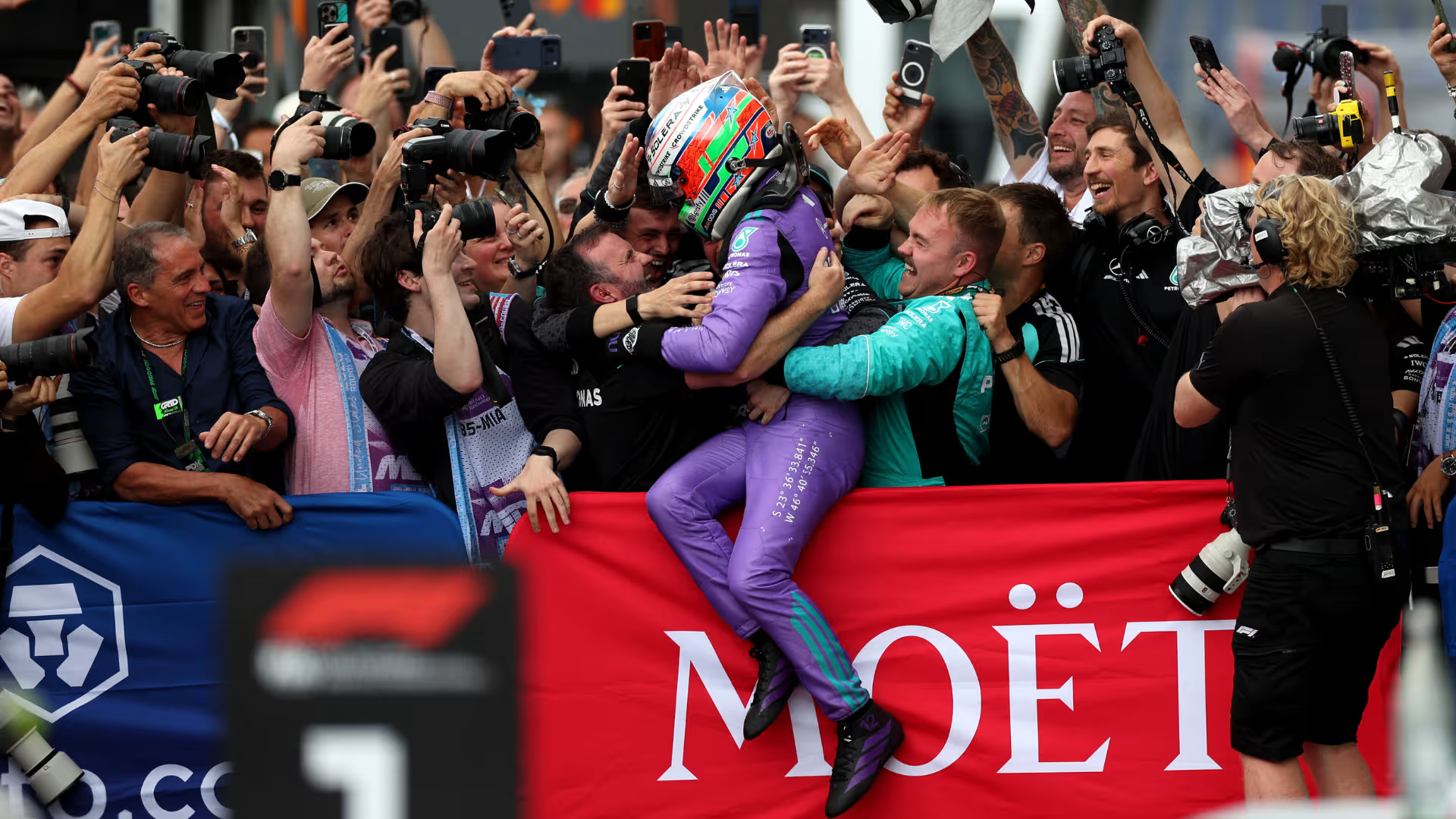
| 2026 | Kimi Antonelli | Mercedes | Suzuka |
| Year | Winner | Team | Circuit |
|---|---|---|---|
| 1976 | Mario Andretti | Lotus | Fuji Speedway |
| 1977 | James Hunt | McLaren | Fuji Speedway |
| 1978 | Not Held | — | — |
| 1979 | Not Held | — | — |
| 1980 | Not Held | — | — |
| 1981 | Not Held | — | — |
| 1982 | Not Held | — | — |
| 1983 | Not Held | — | — |
| 1984 | Not Held | — | — |
| 1985 | Not Held | — | — |
| 1986 | Not Held | — | — |
| 1987 | Gerhard Berger | Ferrari | Suzuka |
| 1988 | Ayrton Senna | McLaren | Suzuka |
| 1989 | Alessandro Nannini | Benetton | Suzuka |
| 1990 | Nelson Piquet | Benetton | Suzuka |
| 1991 | Gerhard Berger | McLaren | Suzuka |
| 1992 | Riccardo Patrese | Williams | Suzuka |
| 1993 | Ayrton Senna | McLaren | Suzuka |
| 1994 | Damon Hill | Williams | Suzuka |
| 1995 | Michael Schumacher | Benetton | Suzuka |
| 1996 | Damon Hill | Williams | Suzuka |
| 1997 | Michael Schumacher | Ferrari | Suzuka |
| 1998 | Mika Häkkinen | McLaren | Suzuka |
| 1999 | Mika Häkkinen | McLaren | Suzuka |
| 2000 | Michael Schumacher | Ferrari | Suzuka |
| 2001 | Michael Schumacher | Ferrari | Suzuka |
| 2002 | Michael Schumacher | Ferrari | Suzuka |
| 2003 | Rubens Barrichello | Ferrari | Suzuka |
| 2004 | Michael Schumacher | Ferrari | Suzuka |
| 2005 | Kimi Räikkönen | McLaren | Suzuka |
| 2006 | Fernando Alonso | Renault | Suzuka |
| 2007 | Lewis Hamilton | McLaren | Fuji Speedway |
| 2008 | Fernando Alonso | Renault | Fuji Speedway |
| 2009 | Sebastian Vettel | Red Bull | Suzuka |
| 2010 | Sebastian Vettel | Red Bull | Suzuka |
| 2011 | Jenson Button | McLaren | Suzuka |
| 2012 | Sebastian Vettel | Red Bull | Suzuka |
| 2013 | Sebastian Vettel | Red Bull | Suzuka |
| 2014 | Lewis Hamilton | Mercedes | Suzuka |
| 2015 | Lewis Hamilton | Mercedes | Suzuka |
| 2016 | Nico Rosberg | Mercedes | Suzuka |
| 2017 | Lewis Hamilton | Mercedes | Suzuka |
| 2018 | Lewis Hamilton | Mercedes | Suzuka |
| 2019 | Valtteri Bottas | Mercedes | Suzuka |
| 2020 | Cancelled | — | — |
| 2021 | Cancelled | — | — |
| 2022 | Max Verstappen | Red Bull | Suzuka |
| 2023 | Max Verstappen | Red Bull | Suzuka |
| 2024 | Max Verstappen | Red Bull | Suzuka |
| 2025 | Max Verstappen | Red Bull | Suzuka |
| 2026 | Kimi Antonelli | Mercedes | Suzuka |
Why the Japanese Grand Prix Is One of F1’s Best Races
Three elements explain its enduring reputation.
1. A driver’s circuit
Suzuka rewards precision more than brute power. The best drivers maintain rhythm through the Esses and carry speed through 130R.
2. Strategic tension
Overtaking is difficult. Track position matters enormously. That forces teams to make aggressive strategic calls.
3. Championship drama
Historically the race often decided titles. Even when it does not, the circuit tends to expose which teams truly have the fastest package.
That mix makes the Japanese GP one of the few races where pure driving ability still visibly influences the result.
Prediction for the 2026 Japanese Grand Prix
Our predicted podium:
- George Russell – Mercedes
- Kimi Antonelli – Mercedes
- Charles Leclerc – Ferrari
Mercedes appears to be the dominant force in the early season with their battery management and superior power unit. Tyre management will play a major factor and Mercedes’ drivers do not have to push the car as hard as their competitors.
Ferrari should remain competitive but may struggle with tyre degradation in the long middle stint.
Dark horse: Max Verstappen
Writing off Verstappen at Suzuka would be foolish. His four consecutive wins demonstrate a driver who understands the rhythm of this circuit better than anyone currently on the grid.
Even with a weaker car, Verstappen has repeatedly extracted victories here through qualifying pace and race management. If Red Bull manages to find a fix to the reliability issues, he is well capable of fighting for the podium spots.
Why the Japanese Grand Prix Winners List Still Matters
Senna. Schumacher. Hamilton. Verstappen. The names repeat because Suzuka rewards greatness.
The circuit strips away excuses. Weak cars struggle in the high-speed sections. Drivers without confidence lose time instantly. Teams that master aerodynamic efficiency usually emerge as genuine championship contenders.
That is why the Japanese Grand Prix continues to matter in every era of Formula 1. It remains one of the few races where the sport’s hierarchy becomes unmistakably clear.
As long as Suzuka remains on the calendar, the Japanese Winners List will keep growing with names that define their generation of Formula One.
Recent Posts
-
F1 Teams Valuations: 2026 vs 2020
-
What is the F1 Cost Cap and how did it transform the sport
-
The Best Race Engineers of F1 History
-
The Many Records of Lewis Hamilton: 2 Decades of Brilliance
-
What happened to the 2023 Red Bull F1 Team?
-

Canadian Grand Prix Winners List (1967-Present)
-
2026 F1 Steering Wheel Explained
-
All F1 Title Sponsors in 2026
-
Bolt Sponsors Paul Aron: A Power Sponsorship
-
2026 Miami Grand Prix Results